What ultrasonic pest repellers claim to do
(and why it’s convincing)
Most plug-in ultrasonic units market the same core idea: they emit high-frequency sound that humans can’t hear but pests hate, driving them out of your home.
Why people love the idea
- It’s non-toxic and feels safer than sprays.
- It’s easy (no cleanup, no baiting, no traps).
- It promises a whole-home solution for a low one-time cost.
The problem is that pest behavior and building layouts aren’t impressed by marketing copy.
The biggest ultrasonic myths (and what usually happens in real homes)
Myth #1: “Ultrasonic sound fills the entire room” – Ultrasound behaves more like a beam than a cloud.
- It’s directional.
- It doesn’t travel well through walls, doors, cabinets, couches, or clutter.
- Soft materials (curtains, rugs) and irregular surfaces can reduce or scatter it.
What this means in practice: the places pests actually spend time—behind appliances, inside wall voids, under sinks, in cabinets—are often the least affected areas.
Myth #2: “If you can’t hear it, pests can—and they’ll leave”
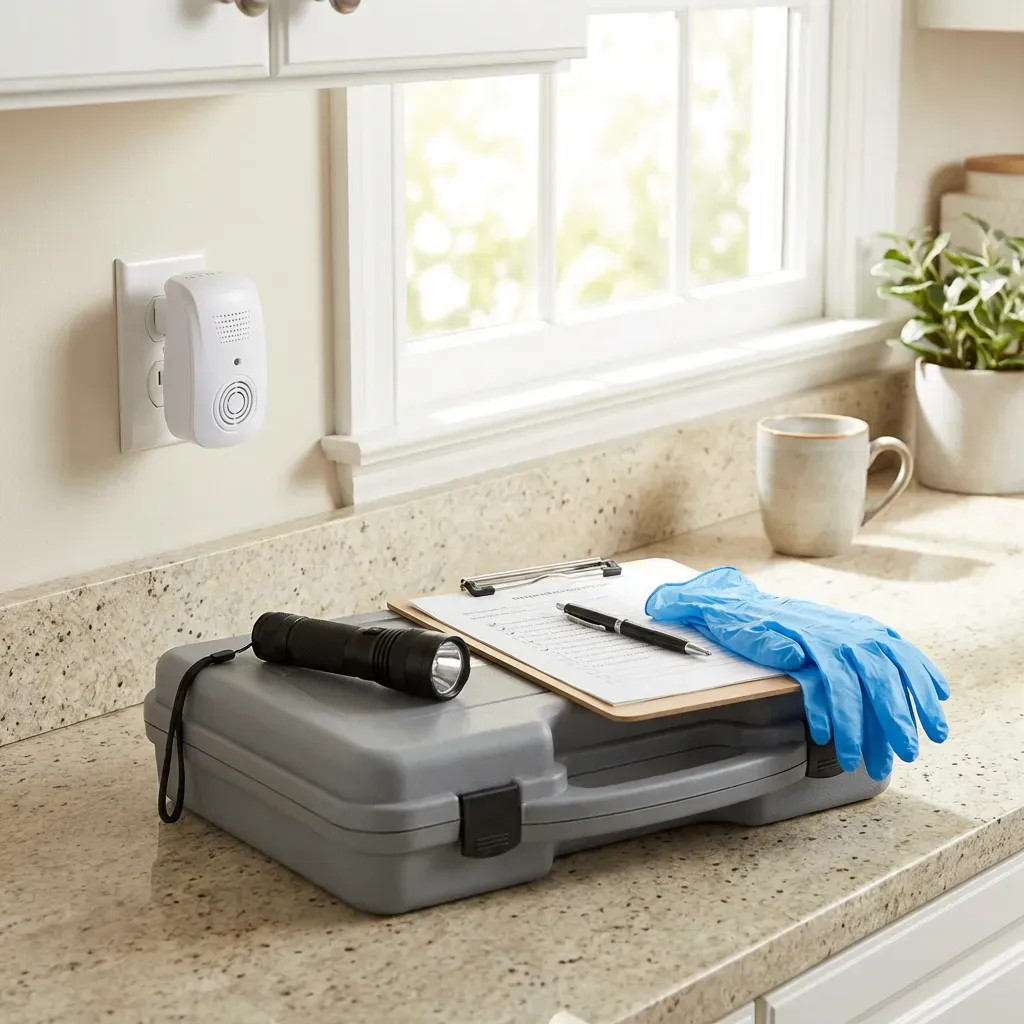
Some animals can detect higher frequencies than humans, but detection doesn’t automatically equal avoidance.
- Pests respond to food, water, warmth, and shelter far more reliably than to a novel sound.
- Many infestations happen in hidden, protected spaces where the signal is weaker.
- Even when pests notice the sound initially, they may habituate (get used to it).
Translation: “annoying” is not the same as “effective,” especially when a kitchen offers snacks and water on demand.
Myth #3: “One device protects the whole house”
This is one of the most common misconceptions.
- Multi-room homes have corners, hallways, furniture blocks, and closed doors.
- Pests travel along edges (walls, pipes, wiring routes), not across open spaces like a Roomba.
What homeowners see: They plug in a device in the living room and still find activity in the pantry, under the sink, or behind the stove—because those are separate micro-environments.
Myth #4: “Ultrasonics work on every pest—mice, rats, roaches, ants, spiders”
A single tool that “works on everything” is usually a red flag.
Different pests have different sensory strengths and behavior:
- Ants follow chemical trails and food cues.
- Roaches prefer tight, hidden harborage.
- Rodents are driven by nesting sites, food, and safe travel routes.
Bottom line: a one-size-fits-all frequency solution doesn’t match how infestations actually operate.
Myth #5: “If you still see pests, you just need to wait”
Some packaging suggests a “few weeks” before results.
Here’s what often happens:
- You keep seeing pests… because the source (entry point, nest site, food access) hasn’t changed.
- Populations may continue breeding during the waiting period.
- The longer you wait, the more likely the issue becomes bigger and more expensive to resolve.
Waiting can be reasonable for some interventions—ultrasonics generally aren’t one of them.
Myth #6: “They’re a humane alternative to ‘dangerous chemicals’”
This one is nuanced.
- Avoiding unnecessary chemical exposure is a valid goal.
- But “chemical-free” doesn’t equal “problem-free.”
- The most effective programs often rely on targeted, minimal-use products plus exclusion and sanitation, not blanket spraying.
A good professional approach is typically less chemical-heavy than repeated DIY foggers and random store sprays.
GET IN TOUCH
Schedule a Visit
Why ultrasonics tend to disappoint: the “real reasons” pests keep showing up
Pest issues persist for a few predictable reasons—none of which a plug-in device solves on its own.
1) Entry points stay open
- If a rodent can still get in, it will.
2) Food and water remain available
- Crumbs, pet bowls, recycling residue, dripping pipes, and overflow bins are powerful incentives.
3) Harborage remains undisturbed
- Roaches and rodents thrive when they can hide in warm, tight areas near food and water.
4) The problem is coming from a neighboring unit
- In apartments and attached homes, activity may be driven by shared walls and voids, requiring a coordinated plan.
Ultrasonics don’t address root causes; they try to discourage symptoms.
So… are ultrasonic pest repellers totally useless?
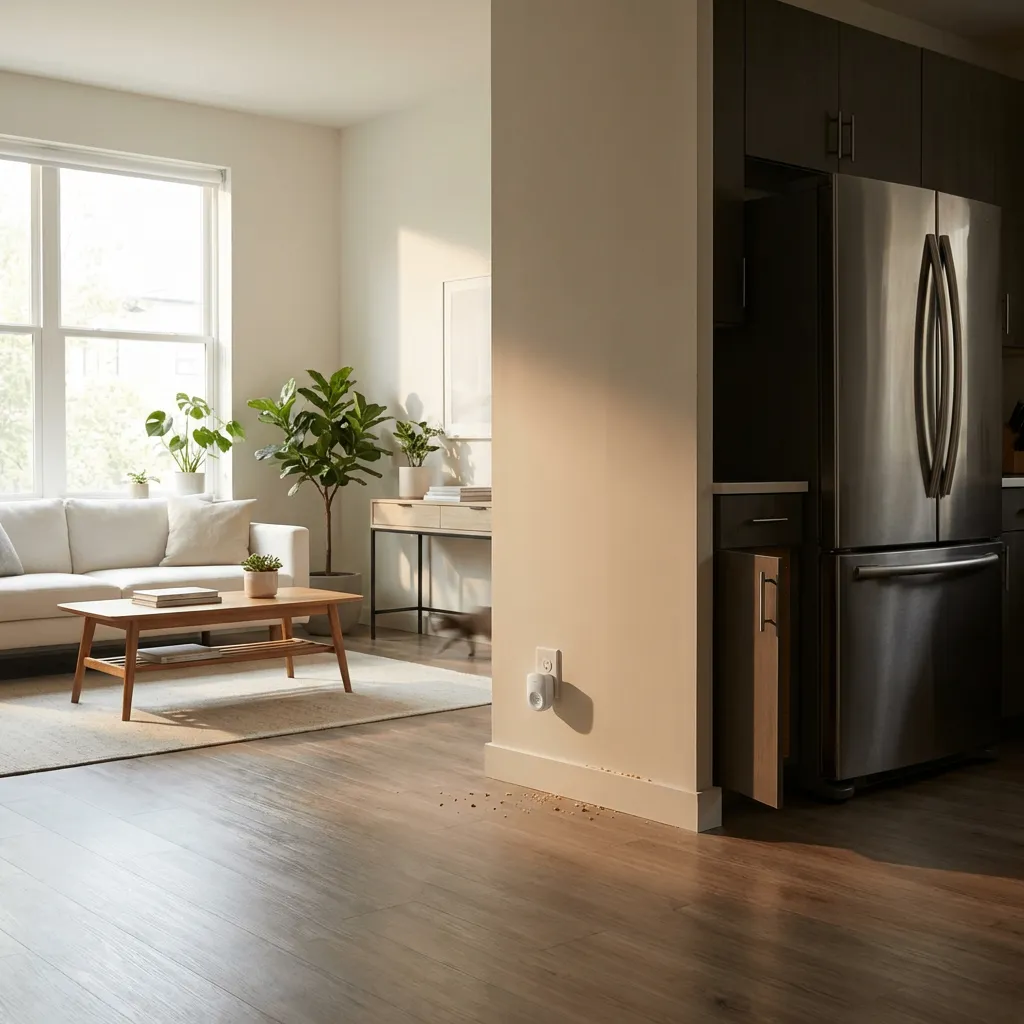
They’re not “magic,” but they aren’t automatically a scam either. The most honest take is:
- As a standalone solution: usually disappointing.
- As a supplemental gadget: sometimes people feel it helps in open areas, but results are inconsistent and hard to measure.
If you already have an active infestation, the better question is not “which gadget?” but “what’s the source?”
The principle is simple: if rats can’t enter and can’t feed, the problem collapses.
What actually works better (high-level, not a DIY recipe)
Here’s what effective control typically includes—without getting into a step-by-step that belongs in a professional service:
1) Inspection that identifies the type and pressure
- What pest is it?
- Where is it coming from?
- What conditions are supporting it?
2) Exclusion (blocking access)
The most cost-effective “treatment” is often stopping entry.
3) Targeted control where pests live and travel
Good programs target:
- active zones
- harborage
- travel routes
- monitoring points
4) Follow-up and verification
If there’s no follow-up, you don’t know if you fixed the cause—or just paused the symptoms.
The 6-question checklist: should you trust an ultrasonic device claim?
- Before buying (or before blaming yourself), run these quick filters:
- Does it explain limitations (walls, cabinets, clutter), or claim “whole home” coverage?
- Does it name the pest clearly, or list every pest on earth?
- Does it mention real-world setup conditions, or just “plug it in anywhere”?
- Does it rely on long waiting periods instead of measurable results?
- Is there independent testing beyond testimonials?
- Are you in an apartment/attached unit, where the source may not be inside your space?
- If the answers feel fuzzy, results usually are too
A better way to frame ultrasonics (and save money)
If you want to use an ultrasonic device, treat it like a background deterrent—not a solution. The moment you see consistent signs (daily sightings, droppings, recurring trails, or nighttime activity), it’s time to move to a cause-based plan.
Because pests don’t leave homes because they’re annoyed. They leave because the home stops working for them.
Takeaways (the part to remember)
- Ultrasonic repellers often fail because ultrasound doesn’t penetrate the spaces pests actually use.
- “Covers the whole house” and “works on every pest” are common marketing myths.
- The most reliable results come from inspection + exclusion + targeted control + follow-up.
If you’ve tried ultrasonic devices and pests are still showing up, that’s usually a sign the issue needs proper identification and source control—not another gadget. A professional inspection can pinpoint where activity is coming from and what’s sustaining it, so the solution is targeted, efficient, and long-lasting.