
The phrase "Integrated Pest Management" appears in every food safety standard, every audit checklist, and most pest control company brochures, including ours. But what does it actually mean in practice, and why does it produce better outcomes than a traditional spray-on-schedule programme?
This article explains the IPM framework in plain language, shows how it maps onto South African compliance requirements, and gives you a practical way to evaluate whether your current pest control provider is genuinely running an IPM programme or just using the label.
What IPM Is, and What It Isn't
IPM is a preventive, science-based decision-making framework for managing pest populations. It is not a product, a frequency, or a trade name. An IPM programme is characterised by four attributes:
- It prioritises prevention over reaction.
- It uses monitoring data to drive decisions, not a calendar.
- It applies the least disruptive intervention that will be effective.
- It evaluates outcomes and adjusts based on results.
A programme that sprays every month regardless of what the monitoring data shows is not an IPM programme. Neither is one that only responds when a pest is seen by a member of staff. IPM requires structured monitoring with defined thresholds and documented decision logic.
The Four Pillars in Detail
1, Prevention
Prevention means removing the conditions that allow pests to enter, establish and breed. It includes structural work (sealing penetrations, replacing door seals, fitting drain covers), sanitation controls (waste management procedures, cleaning schedules that eliminate food residues), and staff training. Research consistently shows that day-to-day behaviours, closing loading doors promptly, storing packaging off the floor, managing spills immediately, have more impact on pest pressure than any chemical programme.
2, Monitoring
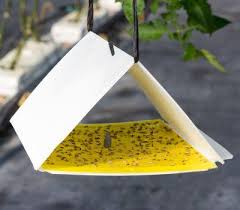
Monitoring is the intelligence-gathering phase. A correctly designed monitoring network, appropriate device types, positioned at actual risk points, inspected on a defined schedule, tells you what is present, where, in what numbers, and whether pressure is increasing or decreasing. Without this data, every treatment decision is a guess.
3, Intervention Thresholds
An IPM programme defines, in advance, what level of pest activity triggers a treatment response. For a food-grade facility this threshold may be zero, any evidence of a specific pest species triggers immediate corrective action. For other pest categories in lower-risk zones, a threshold might be expressed as a trap count or an observation frequency. The key is that the threshold is documented, agreed with the client, and consistently applied.
4, Evaluation
Did the intervention work? Did pest pressure decline after the treatment? Is the programme overall reducing the frequency of threshold breaches over time? Evaluation closes the loop. Without it, a programme can run for years providing activity that looks like pest control while delivering no measurable improvement in outcomes.

How IPM Maps to HACCP, BRCGS and FSSC 22000
All three major food safety certification schemes in use across South Africa require pest control to be managed as a documented Prerequisite Programme (PRP). The specific language differs between schemes but the practical requirements converge on the same expectations:
- A documented procedure covering scope, frequencies and responsibilities.
- A current site risk assessment identifying relevant pest species and risk zones.
- A numbered site map showing all monitoring device locations.
- Service records with device-level findings, treatments applied and corrective actions raised.
- Evidence that the programme is reviewed and improved over time.
These requirements are precisely what a properly structured IPM programme generates by design. A spray-schedule programme, by contrast, typically produces service records that confirm a technician visited and applied product, but provide no monitoring data, no trend analysis, and no evidence of threshold-based decision making.
"IPM should be embedded in the Food Safety Management System as a documented prerequisite programme with clear responsibilities, approved suppliers, and defined acceptance criteria."
, SANS 10049 / HACCP Prerequisite Programme FrameworkHow to Tell if Your Provider is Running Real IPM
Ask your current provider these five questions:
- Can you show me a numbered floor plan of every monitoring device on my site?
- What were the trap counts from last month's visit, by device?
- What is the defined intervention threshold for rodents in my production area?
- What trend does the last six months of monitoring data show?
- When did you last update the site risk assessment?
If any of these questions produce a blank look or a vague answer, your programme is not delivering IPM, it is delivering pest control that calls itself IPM.
Switch to a programme built on real IPM
ASC Pest Control designs every commercial programme around SANS 10049-aligned IPM principles. We provide numbered site maps, device-level reporting, threshold documentation and monthly trend analysis as standard, not as an upgrade.