
Termites cause more structural damage to South African homes and commercial buildings each year than fires and floods combined. In the Eastern Cape, with its warm coastal climate, high humidity in the Port Elizabeth/Gqeberha basin, and the prevalence of older timber-framed structures in suburbs like Walmer, Summerstrand and Newton Park, the risk is particularly high. Yet most homeowners discover a termite infestation only after significant, costly damage has already occurred.
This article explains the two main termite species you'll encounter in the Eastern Cape, the early warning signs that are easy to miss, and what to do about them.
The Two Species You Need to Know
Subterranean Termites (Microtermes & Coptotermes species)
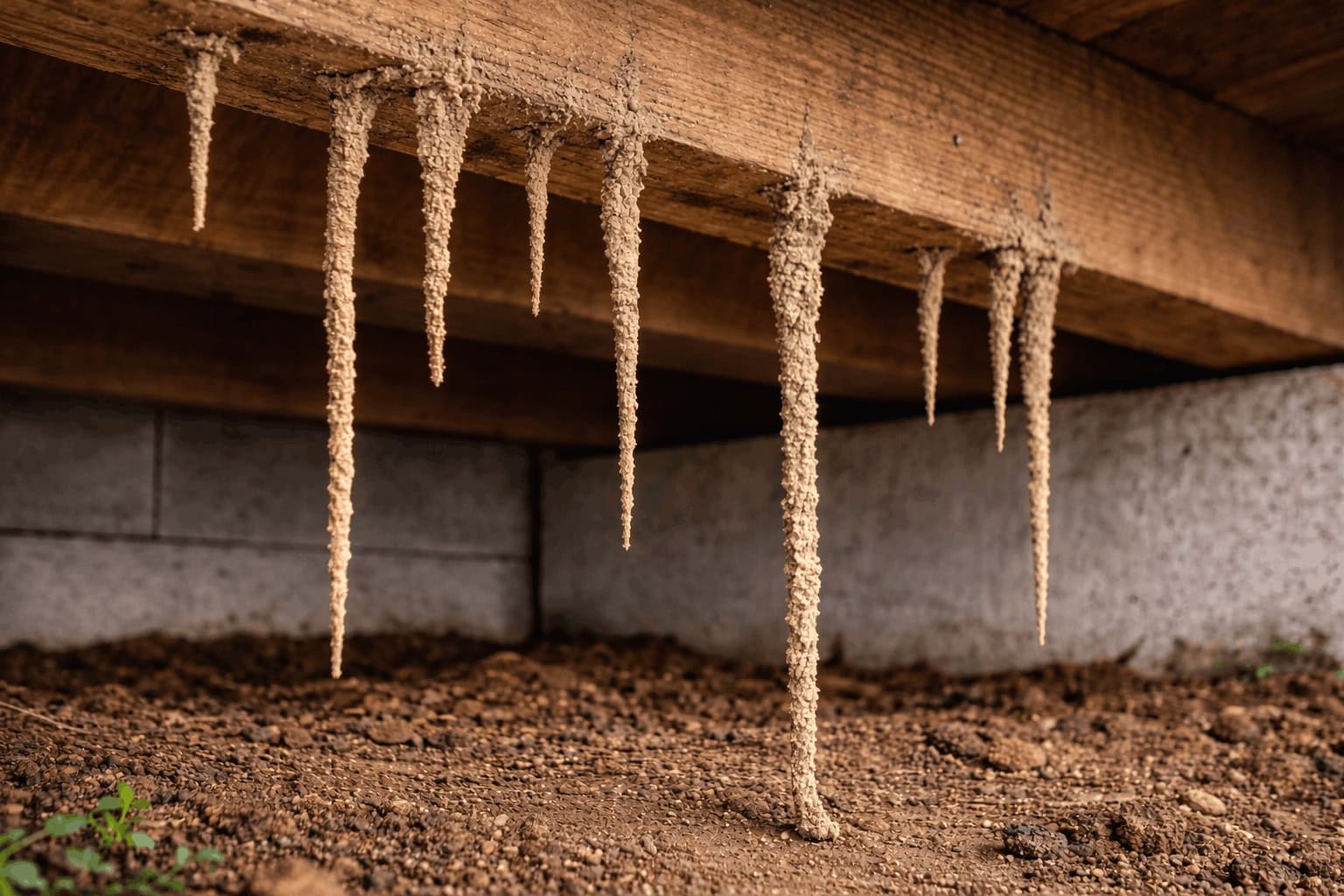
These are the most structurally destructive. Subterranean termites live in large colonies in the soil and travel to timber food sources through sealed mud tubes, keeping themselves protected from open air and predators at all times. Because they work entirely inside timber, consuming the cellulose and leaving only a paper-thin outer shell, you can have an active, mature colony working through your roof trusses, floor joists or window frames for years without any obvious sign.
Drywood Termites (Cryptotermes species)
Drywood termites do not require contact with soil. They establish colonies directly inside dry timber, furniture, roof trusses, wooden window frames and doors. Colonies are smaller than subterranean species but can be present in multiple independent locations within the same structure. Their characteristic sign is the presence of frass, small, hexagonal, sand-grain-sized pellets that they push out of small kick-out holes in the timber.
The 5 Early Warning Signs
- Mud tubes on foundation walls or internal skirtings, pencil-width tunnels of compacted soil running up masonry or timber surfaces. Even a single tube indicates an active subterranean colony nearby.
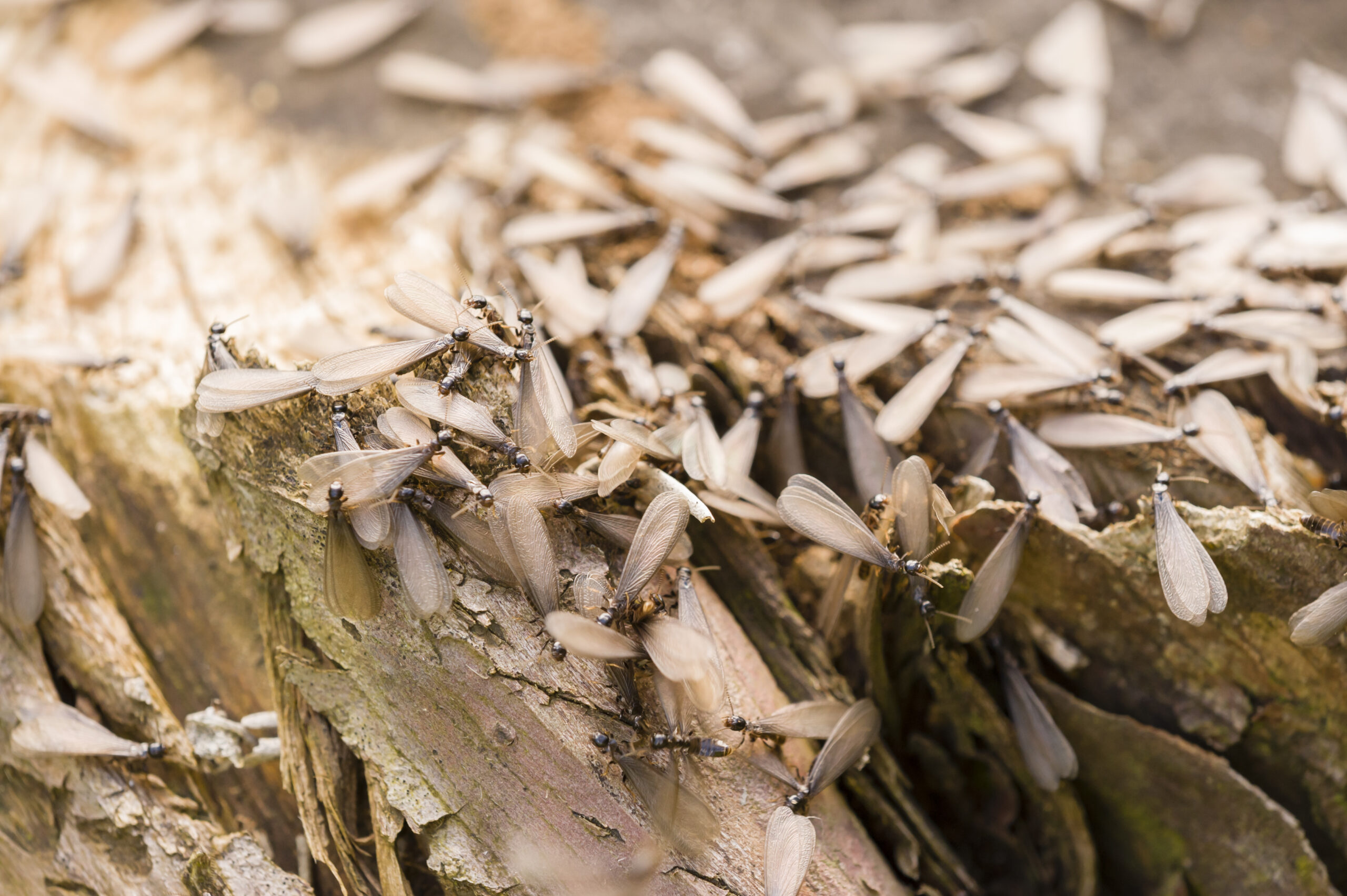
- Discarded wings near windows and doors in spring, when a subterranean or drywood colony matures, it produces winged reproductive alates that swarm to establish new colonies. They shed their wings immediately after landing. A pile of wings on a windowsill in September or October is a high-confidence indicator of a nearby mature colony.
- Hollow-sounding timber, tap structural timber (skirting boards, door frames, floor joists, roof trusses) with a screwdriver handle. A hollow, papery sound indicates the cellulose has been consumed. Solid timber produces a dull thud.
- Blistering or darkening of timber surfaces, subterranean termites working close to the surface cause paint or varnish to blister as they consume the timber underneath. This is often mistaken for water damage.
- Frass (drywood termite droppings), small piles of hexagonal pellets beneath timber furniture, near door frames or under roof timbers indicate an active drywood colony. They are distinctive and should not be confused with sawdust.
Why Over-the-Counter Products Don't Work
Consumer-available termite products, foams, sprays, and dusts, can kill individual termites on contact but cannot eliminate a colony. A subterranean colony of 300,000+ individuals with its queen located metres underground in the soil is not affected by surface treatment. Drywood colonies that are partially treated simply seal off treated galleries and continue in untouched timber.
Professional termite treatment requires colony-targeting approaches: soil treatment (termiticide barriers for subterranean species), localised timber injection or fumigation for drywood species, and in severe cases, full structural fumigation. The correct approach depends on the species, the extent of infestation, and the building structure, which is why a professional inspection is always the first step.
Suspect termites? Book an inspection today.
ASC Pest Control provides professional termite inspections and treatment across Gqeberha, Summerstrand, Walmer, Newton Park, Lorraine, Bluewater Bay and surrounding Eastern Cape suburbs. We quote clearly and honestly with no hidden charges.