
In a food or beverage facility, "we have a pest" is not an answer. "We have Blattella germanica breeding in the wet area behind the packing line" is. Species-level identification is the difference between a targeted, defensible pest management programme and a cycle of spraying that never reaches the source. As practising food safety auditors who also run the pest control, we build every programme around correct identification first, chemical last.
This guide covers the pest species we most commonly find in South African food and beverage environments: commercial bakeries, beverage plants, cold stores, packhouses, mills, warehouses and retail food premises. For each, we set out the common and Latin name, the key identification features, where it hides in a facility, what its presence actually indicates, and the control approach that follows.
Key takeaways
- Species identification drives source-tracking, entry route, harbourage inspection, product selection and audit trend analysis. Everything downstream depends on it.
- The same "pest" can mean opposite things: a German cockroach signals goods-borne internal breeding; an American cockroach signals drains and voids. The response is different.
- Stored product insects almost always indicate a breeding source inside the product or building fabric, not a random invader. Monitoring and stock inspection matter more than spraying.
- Recording activity by species and by zone, rather than "pest seen", is what turns raw sightings into the trend analysis auditors expect under BRCGS, FSSC 22000 and SANS 10049.
Why species-level identification matters
Correct identification does four jobs at once. First, it points to the source and entry route: an outdoor commensal species tells you to inspect the perimeter and receiving doors, while an indoor breeder tells you the problem arrived in goods or is living in the fabric of the building. Second, it directs harbourage inspection to the right places, so technicians open the right voids and lift the right equipment instead of guessing. Third, it drives correct treatment: the registered product, formulation and placement that works for one species is often useless or even counterproductive for another. Fourth, it enables audit trend analysis, because you can only trend what you have counted correctly. A fly count that lumps house flies with fruit flies hides two completely different problems, one about external hygiene and one about internal fermenting residue.
Under Regulation R638, SANS 10049 and the retailer standards built on BRCGS and FSSC 22000, this is not optional detail. Auditors expect your monitoring records to name the species, trend them by zone, and show that corrective actions target the identified pest. Below is the field guide our technicians work from.
Rodents
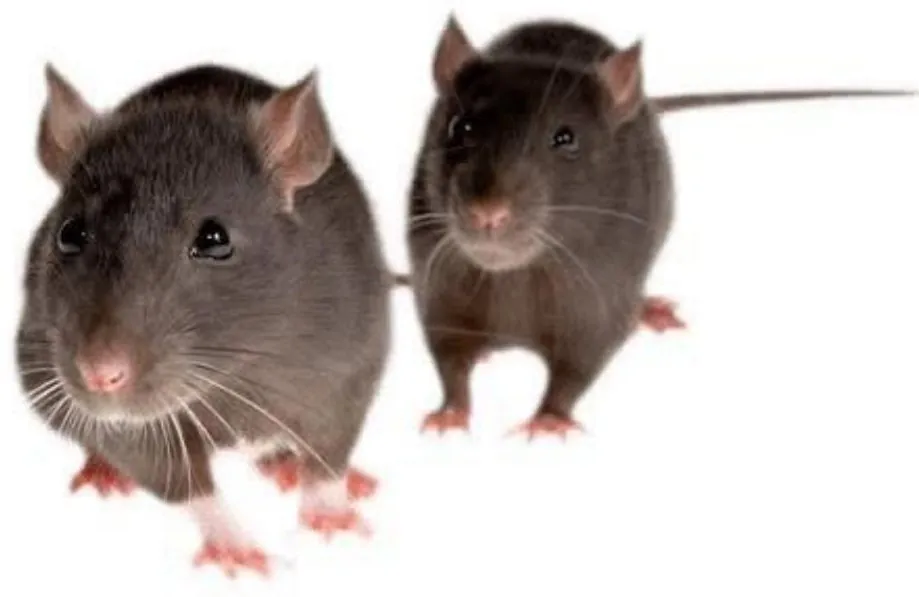
Brown rat
Rattus norvegicus- Key ID features
- Heavy body 20 to 27 cm, blunt nose, small ears and eyes, thick tail shorter than the body. Droppings 12 to 19 mm, capsule shaped. Also called the Norway or sewer rat.
- Where found
- Ground level and below: burrows against foundations, drains, sub-floor voids, external bunds, waste and pallet storage.
- What it indicates
- External harbourage and a reliable water source. Burrowing along the building line and gnaw damage to door sweeps and cabling.
- Control approach
- Perimeter tamper-resistant baiting, proofing of gaps under 20 mm, drain integrity checks, removal of external harbourage. Snap traps and toxicant use per Act 36 registration and placement.
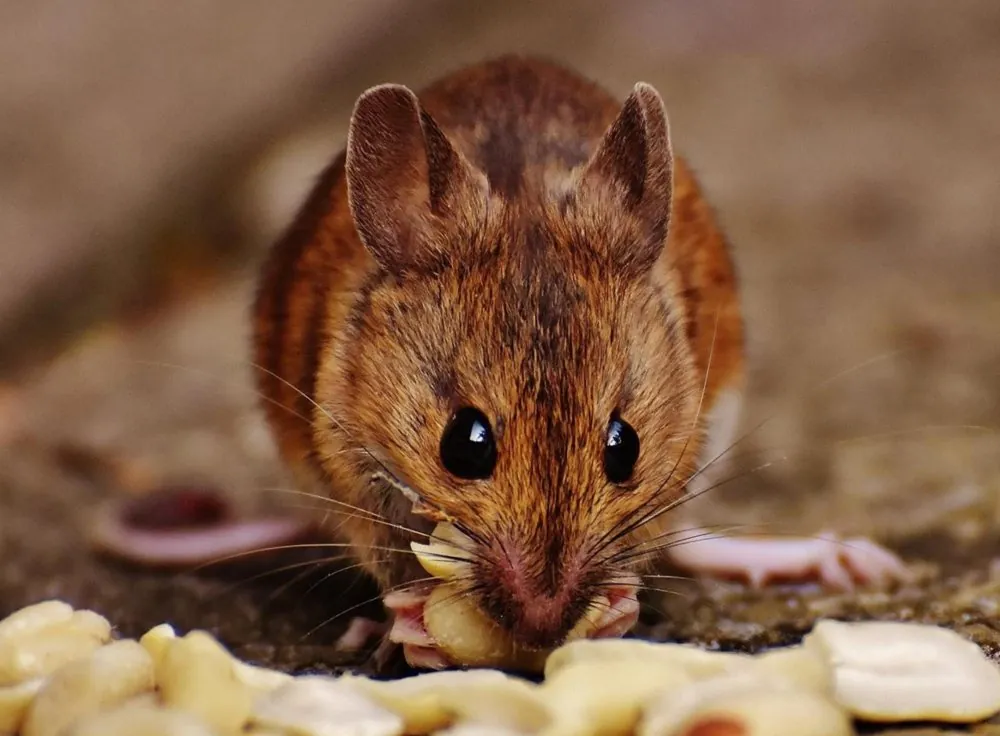
House mouse
Mus musculus- Key ID features
- Small, 7 to 10 cm body, large ears, pointed snout, slender tail as long as the body. Droppings 3 to 6 mm, rice grain shaped and numerous.
- Where found
- Indoors at all levels: voids, false ceilings, racking, cavity walls, machinery bases, stored product. Nests near a food source.
- What it indicates
- Internal harbourage and easy entry. Mice enter through a 6 mm gap and nibble from many points, so widespread minor damage rather than one focus.
- Control approach
- Dense internal monitoring, multi-catch traps and break-back traps, meticulous proofing of small gaps and service penetrations, and hygiene at machinery bases.
Roof rat
Rattus rattus- Key ID features
- Slimmer than the brown rat, pointed nose, large ears, tail longer than the body. An agile climber. Also called the black or ship rat.
- Where found
- High and off the ground: roof voids, cable trays, false ceilings, upper racking, trees and vines against the building.
- What it indicates
- Aerial access routes, overhanging vegetation and roofline gaps. Droppings and grease marks along beams and pipe runs above head height.
- Control approach
- Elevated baiting and traps at ceiling and cable-tray level, cut back vegetation, seal roofline and eaves, and inspect above the racking, not only the floor.
Cockroaches
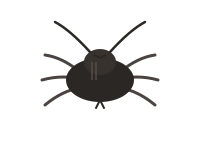
German cockroach
Blattella germanica- Key ID features
- Small, 12 to 16 mm, light tan with two dark stripes behind the head. Fastest breeding cockroach. Egg cases carried by the female until hatching.
- Where found
- Warm, humid, tight harbourage: motor housings, kettle and fryer voids, dishwash areas, cardboard, cracks near heat and moisture.
- What it indicates
- An internal breeding population, usually carried in on cardboard, deliveries or returned equipment. Not a perimeter problem.
- Control approach
- Gel baiting into harbourage, insect growth regulators, deep cleaning of grease and spillage, removal of cardboard, and inspection of incoming goods.
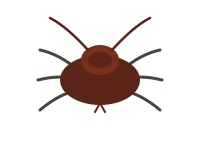
American cockroach
Periplaneta americana- Key ID features
- Large, 30 to 40 mm, reddish brown with a pale yellow band behind the head. Capable of flight in warm conditions.
- Where found
- Drains, sumps, grease traps, sub-floor ducts, service voids, boiler rooms and warm damp basements.
- What it indicates
- A drainage and void problem, not a hygiene failure on the floor. Emergence from drains and gullies after dark.
- Control approach
- Drain treatment and screening, void baiting, sealing floor gullies and service penetrations, and grease trap maintenance.
Oriental cockroach
Blatta orientalis- Key ID features
- Dark, almost black, 20 to 25 mm, glossy body. Sluggish and cool tolerant. A strong musty odour in numbers.
- Where found
- Cool damp low areas: basements, drains, sub-floors, external bunds, refuse areas and the base of cold stores.
- What it indicates
- Standing moisture and decaying organic matter at low level, often linked to drainage and external waste.
- Control approach
- Moisture control, residual treatment of low harbourage, drain and refuse management, and proofing at floor level.
Stored product insects
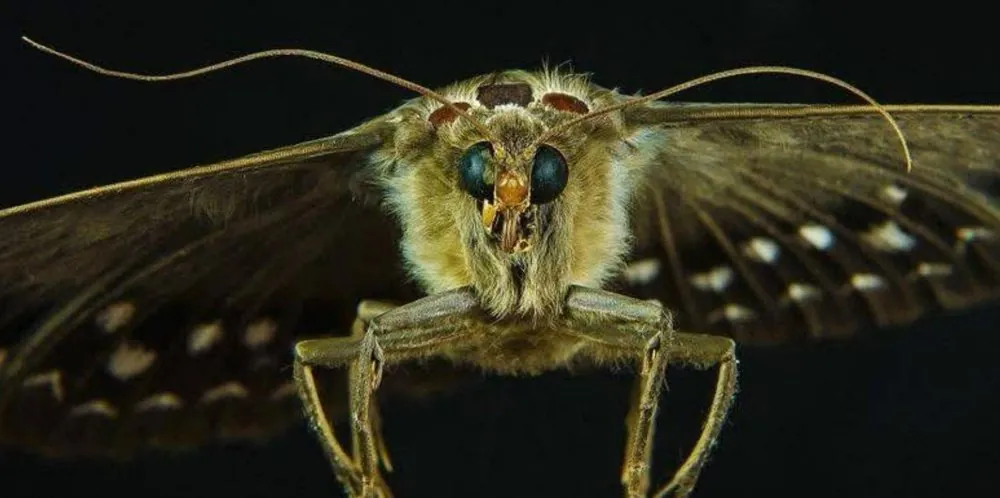
Stored product moths
Ephestia kuehniella / Plodia interpunctella- Key ID features
- Wingspan 15 to 20 mm. The Mediterranean flour moth (Ephestia kuehniella) is grey; the Indian meal moth (Plodia interpunctella) has a coppery bronze outer wing. Silk webbing in product.
- Where found
- Mills, bakeries and dry stores: in flour, grain, nuts, dried fruit and pet food, and webbed into corners, ledges and racking above product.
- What it indicates
- A breeding source inside product or in spillage lodged in cracks and ledges. Webbing and larvae on the surface of bulk goods.
- Control approach
- Pheromone monitoring to locate the focus, stock inspection and rotation, deep cleaning of residue in structural cracks, and targeted treatment or product disposal.
Red flour beetle
Tribolium castaneum- Key ID features
- Small, 3 to 4 mm, flattened reddish brown beetle with clubbed antennae. Moves quickly across surfaces. A pungent odour tainting flour in numbers.
- Where found
- Flour, milled cereals, bran and spillage in mills, bakeries and warehouses. Thrives in residue caught in equipment and cracks.
- What it indicates
- Old spillage and poor stock rotation. A secondary feeder, so its presence often follows damage or moisture in the product.
- Control approach
- Deep cleaning of milled residue, stock rotation, sieving and inspection, monitoring, and structural treatment of harbourage cracks.
Rice / granary weevil
Sitophilus oryzae / granarius- Key ID features
- 3 to 5 mm, dark brown with a long distinct snout. The rice weevil has four pale spots on the wing cases; the granary weevil is uniformly dark.
- Where found
- Whole grain and cereal: wheat, maize, rice and stored seed in silos, mills and bulk stores.
- What it indicates
- A primary internal feeder that develops inside the grain kernel, so infestation is often hidden until adults emerge. Points to old or unmonitored stock.
- Control approach
- Intake inspection, stock rotation, moisture and temperature control, monitoring, and fumigation or disposal of infested bulk where registered and warranted.
Lesser grain borer
Rhyzopertha dominica- Key ID features
- Small, 2 to 3 mm, dark cylindrical beetle with the head tucked under a hooded thorax. A strong sweet odour in heavy infestation.
- Where found
- Whole grain and cereal products in silos and bulk stores, boring into kernels and leaving fine flour-like frass.
- What it indicates
- An aggressive primary feeder capable of reducing grain to dust. Its presence signals a serious hidden infestation in bulk storage.
- Control approach
- Bulk monitoring and probe trapping, controlled fumigation where registered, aeration and cooling, and disposal of heavily damaged stock.
Psocids (booklice)
Liposcelis spp.- Key ID features
- Tiny, under 2 mm, pale grey or straw coloured, soft bodied and wingless. Seen as moving specks on packaging and shelving.
- Where found
- Humid dry stores, on packaging, pallets, cardboard and the surface of stored goods, and in newly plastered or damp buildings.
- What it indicates
- Elevated humidity and surface mould, on which they feed. A moisture and ventilation problem more than a food contamination one.
- Control approach
- Reduce humidity and improve ventilation, remove mould and damp packaging, dry the store, and monitor. Chemicals are secondary to moisture control.
Flying insects
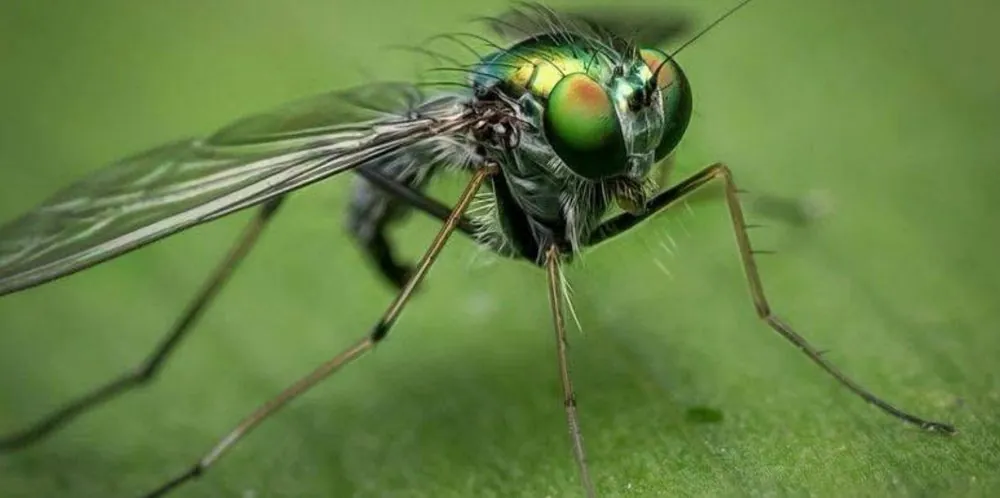
Filth flies and small flies
Musca domestica / Drosophila spp.- Key ID features
- The house fly (Musca domestica) is 6 to 7 mm, grey with four dark thorax stripes. Fruit flies (Drosophila spp.) are 2 to 3 mm with red eyes, hovering near fermenting residue.
- Where found
- House flies at receiving doors, waste and external hygiene points. Fruit flies at drains, floor-wall junctions, and anywhere sugary or fermenting residue collects.
- What it indicates
- House flies indicate external breeding and open access. Fruit flies indicate internal fermenting residue in drains, under equipment and in spillage.
- Control approach
- Insect light traps sited away from product, fly screening and air curtains at doors, drain and residue cleaning for small flies, and external waste management.
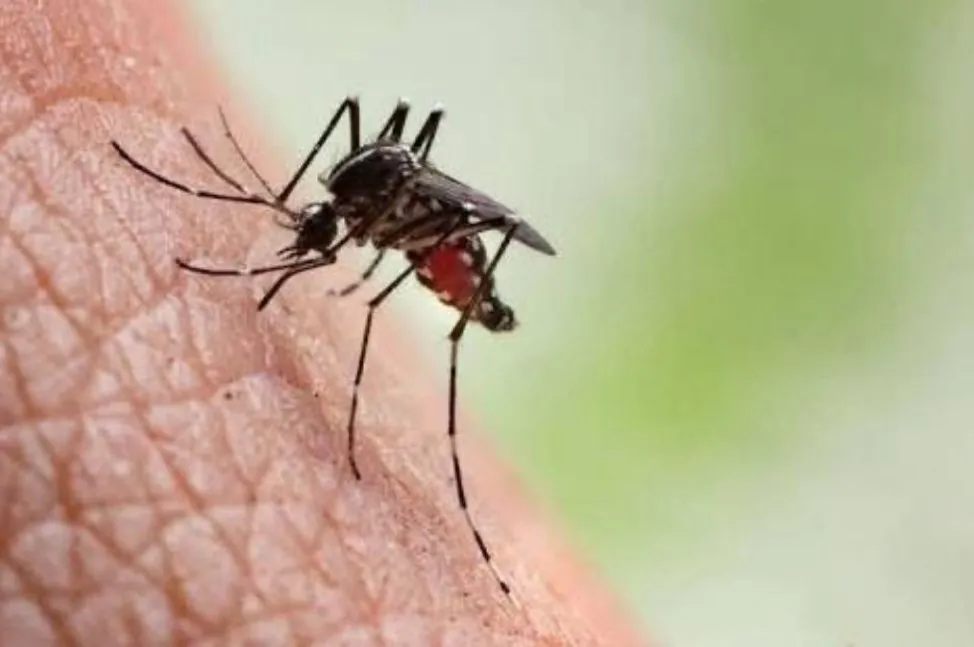
Mosquitoes
Culex / Aedes spp.- Key ID features
- Slender biting flies with long legs and a needle-like proboscis. Aedes species are often dark with pale banding; Culex species are browner.
- Where found
- Near standing water: blocked gutters, unused sumps, water features, discarded containers and poorly draining external areas.
- What it indicates
- Standing water that is acting as a breeding site, usually external or in neglected drainage, and a potential nuisance and health concern for staff.
- Control approach
- Eliminate standing water, clear gutters and sumps, improve drainage, and use larval control in unavoidable water bodies where registered.
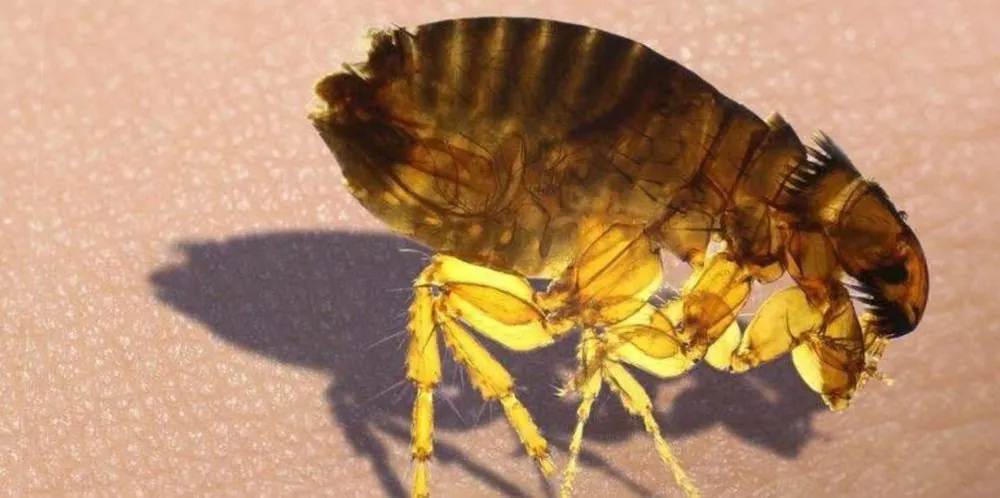
Flea
Ctenocephalides felis- Key ID features
- Tiny, 1 to 3 mm, dark, laterally flattened and wingless, with powerful jumping hind legs. Seen leaving skin bites on staff, usually around the lower legs.
- Where found
- Around rodent harbourage, animal access points, staff welfare areas and any building with a current or recent rodent problem.
- What it indicates
- An active or recent animal or rodent host on site. Fleas rarely appear without a warm-blooded source nearby.
- Control approach
- Remove the host and its harbourage first, then treat affected floor and skirting areas with a registered residual and an insect growth regulator.
Birds and ants
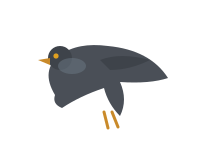
Feral pigeon
Columba livia- Key ID features
- Familiar grey urban pigeon, roughly 30 cm, highly variable plumage. Persistent roosting fouling of ledges, canopies and roof steel.
- Where found
- Roofs, canopies, loading bay steelwork, ledges and voids in the roof structure of warehouses and packhouses.
- What it indicates
- Available roosting and nesting harbourage on the building, and a contamination risk from droppings and feathers over receiving and product areas.
- Control approach
- Proofing with netting, spikes and ledge modification, removal of nesting harbourage, and cleaning and disinfection of fouled areas. Humane, non-lethal exclusion.
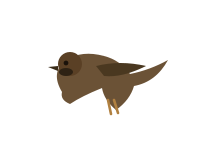
House sparrow
Passer domesticus- Key ID features
- Small brown bird, about 15 cm; males with a grey crown and black bib. Quick to exploit open doors and internal roof voids.
- Where found
- Inside high-bay warehouses through open doors, nesting in roof voids, on internal steelwork and above racking near stored goods.
- What it indicates
- Poor door discipline and internal access. Droppings and nesting material over product and equipment are a direct contamination risk.
- Control approach
- Door discipline, strip curtains and screening, netting off internal roof voids, and humane removal of birds that have gained entry.
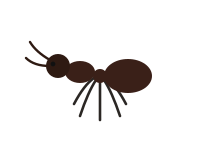
Argentine ant
Linepithema humile- Key ID features
- Small, 2 to 3 mm, uniform light to mid brown, moving in dense persistent trails. Forms large interconnected colonies rather than isolated nests.
- Where found
- Trailing along walls, skirtings, cabling and pipework toward sugary or greasy residue in kitchens, packing and beverage areas.
- What it indicates
- Accessible food residue and moisture, and external nesting with entry through the smallest gaps. Widespread trails point to a large colony network.
- Control approach
- Ant-specific gel and bait stations that are carried back to the colony, residue and moisture removal, and proofing of entry trails. Avoid repellent sprays that split colonies.
Turn identification into a defensible record
Naming the species is only useful if it reaches the record. Our technicians capture every finding at station level in the myASConline portal, tagged by species and zone, so activity trends the way an auditor reads it. A rising fruit fly count at the drains in Zone 3 becomes a graph and a corrective action, not a note that gets lost. That is what SANS 10049, BRCGS and FSSC 22000 mean when they ask for trend analysis feeding the hazard review. Download our species monitoring log from the free checklists and forms page to start recording activity by species on your own site.
Frequently asked questions
Why does species-level pest identification matter in a food facility?
It drives every decision that follows: the likely source and entry route, which harbourage to inspect, which registered product and placement will work, and how to trend one species against another. A German cockroach signals goods-borne internal breeding; an American cockroach signals drains and voids. Treating them the same wastes chemical and leaves the real source active.
How do you tell a rat infestation from a mouse infestation?
Droppings are the fastest clue. Rat droppings are 12 to 19 mm and capsule shaped; mouse droppings are 3 to 6 mm, rice grain shaped and far more numerous. Rats need water and travel set runs along walls; mice range widely, nibble from many points and enter through a 6 mm gap. Gnaw marks, smears and burrow size confirm which one you have.
What does finding stored product insects in a warehouse mean?
Species such as the red flour beetle, weevils and Indian meal moth almost always mean a breeding source inside the product or the building fabric, not a casual invader. The response is stock inspection, first-in first-out review, sieving of suspect batches, deep cleaning of spillage in cracks and ledges, and pheromone monitoring to locate the focus before it spreads through the racking.