
Disinfection / Environmental Pathogen Control
Pathogen disinfection for food facilities, delivered with ASC Food Safety Consultants.
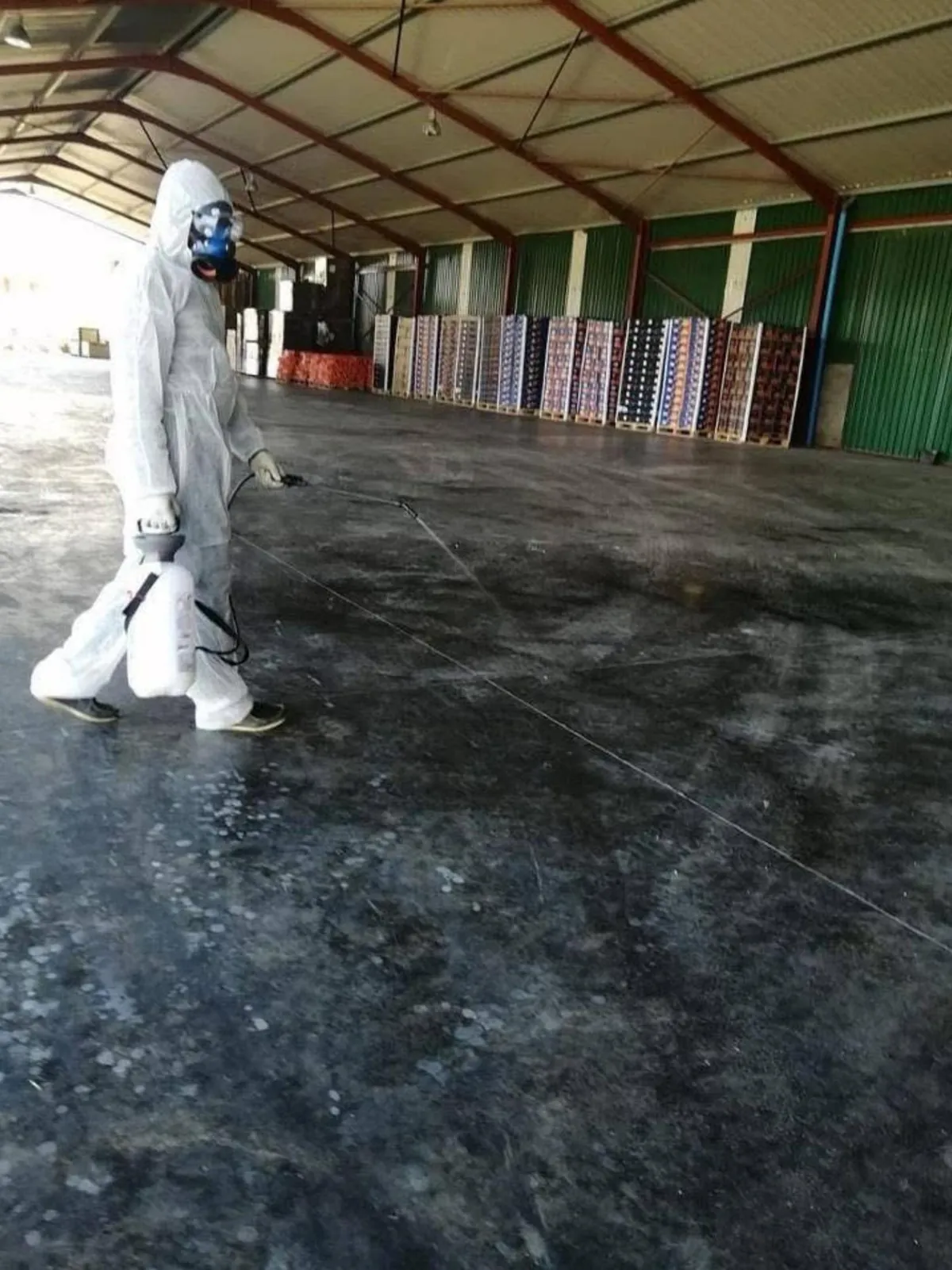
Cleaning removes what you can see. Pathogens live in what you cannot. ASC brings together two disciplines most contractors cannot: ASC Food Safety Consultants find the pathogen and its harbourage through environmental monitoring and risk assessment, then write the microbiological recommendations, and the ASC disinfection division deep cleans and disinfects to that plan, targeting drains, junctions, voids and standing water niches with food-grade chemicals. Pre and post verification swabbing proves the pathogen is gone. This is disinfection a laboratory and an inspector actually read.
Why It Matters
Food facilities grow their own pathogens, and the worst of them hide.
A food factory, a busy canteen or a packhouse is warm, wet and rich in nutrients. That is exactly the environment micro-organisms want. Some arrive on raw material, some on people and traffic, and some establish a permanent home inside the fabric of the building. Cleaning removes product residue, fat and visible soil, and your team should own that every day. What cleaning cannot reach is the pathogen sitting in the wet, cold, poorly designed niches: drains, floor and wall junctions, conveyor voids, standing water and cold-room seals.
That is the hidden risk. An environmental swab can come back positive from a spotless-looking room, because the organism lives out of sight and seeds the environment continuously. Left alone it forms protective biofilm, survives ordinary cleaning chemistry and, given a route, reaches product. A positive environmental result is an early warning. Answering it properly, and proving you answered it, is the difference between a corrective action and a recall.
The Pathogens We Target
Three organisms decide whether your product is safe.
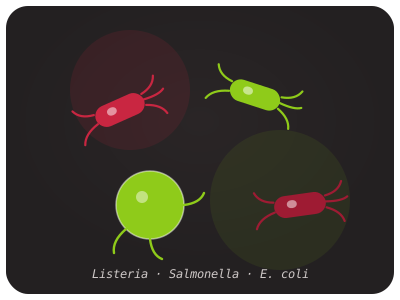
The single most important environmental pathogen in a South African food and beverage plant is Listeria monocytogenes. Listeria is not fussy: it survives refrigeration, it tolerates salt, it forms protective biofilms and it colonises the cold, damp, hard-to-reach niches that routine cleaning cannot reach. Above all it hides in drains. But it is not the only concern, and every one of these is an environmental problem before it is ever a product problem.
Listeria monocytogenes
Cold-tolerant, biofilm-forming and a resident of drains, floor cracks and damp niches. The primary target of specialist food-facility disinfection, and the reason harbourage and drain work matter most.
Salmonella
Surface and traffic-borne, driven off floors, walls and equipment by targeted cleaning and disinfection to shrink the environmental reservoir that feeds product contamination.
E. coli
An indicator of faecal contamination and poor hygiene control. Environmental disinfection of surfaces, drains and traffic routes keeps counts inside specification.
Enterobacteriaceae
The wider indicator family swabbed on surfaces to judge hygiene control. Rising Enterobacteriaceae counts warn that cleaning and disinfection are slipping, long before a pathogen is confirmed, which makes them a valuable early signal on food-contact zones.
Know The Signs
Five signs routine cleaning is not enough.
Specialist disinfection is needed, not just deeper cleaning, when an environmental swab returns positive for Listeria, Salmonella or E. coli, when the same drain or zone tests positive repeatedly despite normal cleaning, when a customer or retailer raises a microbiological complaint, when Enterobacteriaceae counts are trending upward on routine surface swabs, or when a new pathogen risk appears after a layout, equipment or process change that has not yet been risk-assessed. Cleaning removes what you can see; these signs mean something is surviving where you cannot.
A positive environmental swab
A single positive result for Listeria, Salmonella or E. coli from your own or an auditor's swabbing programme is the clearest possible signal that a harbourage exists and needs finding, not just recleaning.
The same spot tests positive again
A drain, junction or void that returns positive more than once despite routine cleaning means the organism has established a protective biofilm that ordinary cleaning chemistry cannot break down.
A customer or retailer complaint
A microbiological complaint or a failed customer audit is often the first external sign of an environmental issue that internal monitoring missed.
Rising Enterobacteriaceae counts
Enterobacteriaceae is the early-warning indicator family. A rising trend on food-contact surfaces flags slipping hygiene control before a named pathogen is ever confirmed.
A new, un-assessed risk
New equipment, a layout change or a new process line introduces niches, seams and standing-water points that have never been swabbed or risk-assessed for pathogen harbourage.
Had a positive result? Call 041 004 0037 to report it or request specialist disinfection — minutes matter once a swab comes back positive.
Credentials You Can Verify
Registered, accredited and accountable.
The ASC Method
Microbiological expertise plus specialist cleaning, working as one.
Anyone can fill a room with fog. Controlling a pathogen takes two disciplines working together. ASC delivers pathogen disinfection in conjunction with ASC Food Safety Consultants, so every job is diagnosed before it is treated, and proven after. The consultants find the organism and write the microbiological recommendations. The disinfection division executes them with specialist cleaning that reaches the harbourage. This partnership is why ASC is uniquely qualified.
Step 1
Environmental monitoring, risk assessment and inspection.
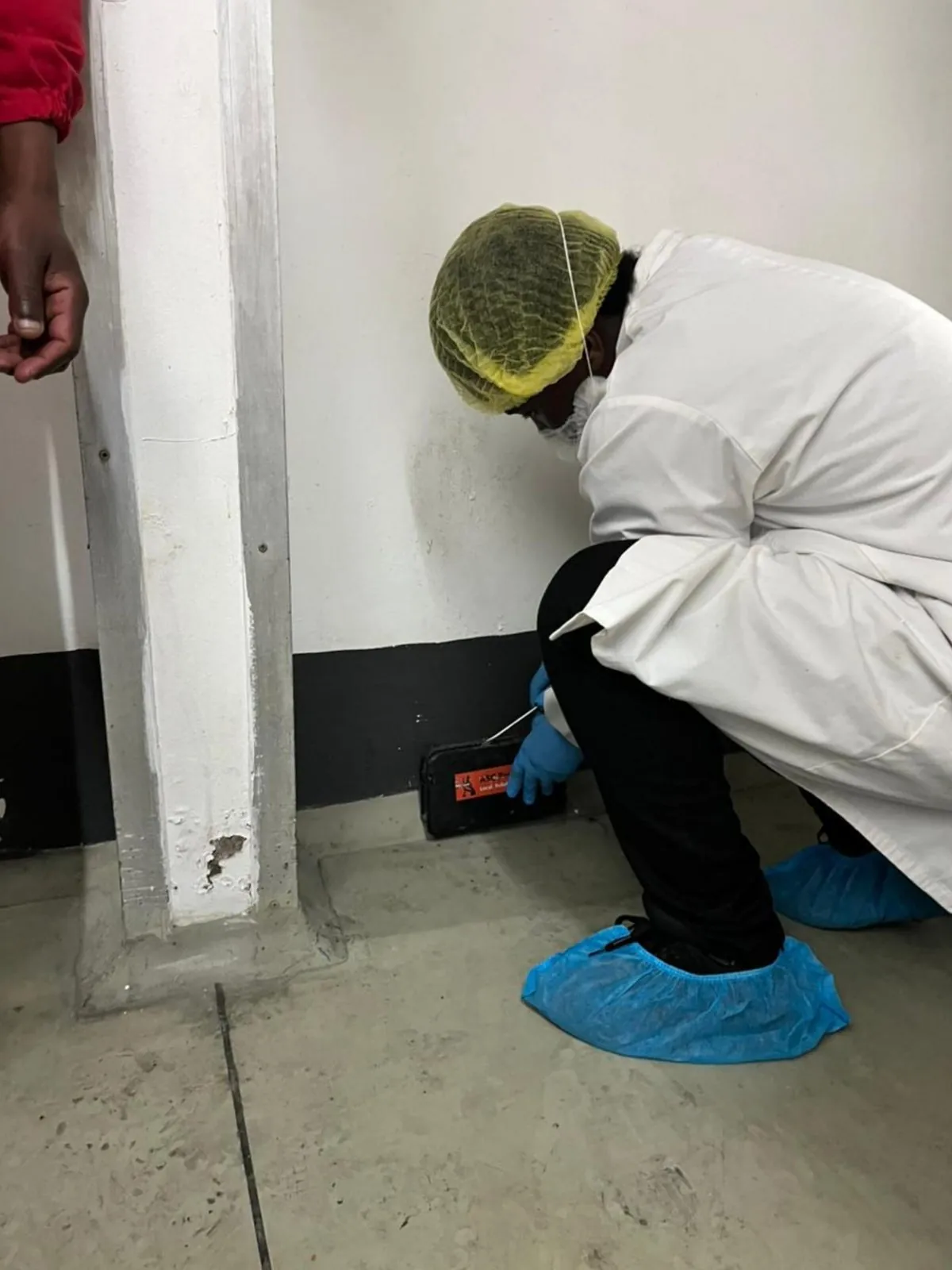
ASC Food Safety Consultants walk the facility, read your environmental monitoring history and inspect the site for harbourage. They identify the pathogen and, just as importantly, where it lives: the specific drains, the floor and wall junctions, the conveyor voids and the standing-water niches that shelter it. Pre-treatment swabbing maps where the organism actually sits, so nothing is guessed. This is a diagnosis, done by people who audit food factories for a living.
Environmental Monitoring Framework
Every zone, sampled the right way, at the right frequency.
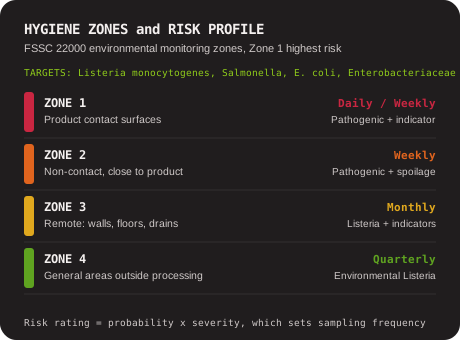
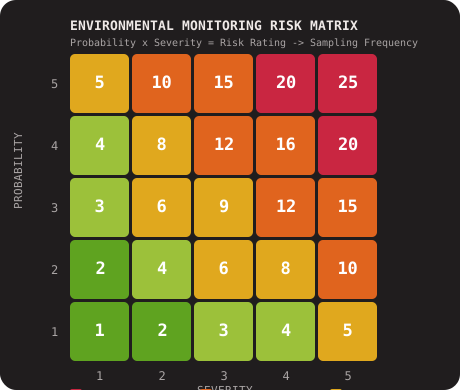
Following the FSSC 22000 environmental monitoring approach, ASC Food Safety Consultants run a documented Environmental Monitoring Risk Assessment. Each area is placed in a hygiene zone (Zone 1 product contact through to Zone 4 general areas), given a sample type and sampling tool, and scored on the matrix above. The risk rating then sets how often that point is sampled, from daily in the highest-risk zones to biannually in the lowest.
| Hygiene zone | Typical sample types | Sampling tools | Organisms targeted |
|---|---|---|---|
| Zone 1 Product contact surfaces (slicers, conveyors, hands, knives) | Surface swab, protein swab, ATP swab | Dry cotton, wet cotton, sponge swab, RODAC plate | Pathogenic and indicator organisms |
| Zone 2 Non-contact surfaces close to product (equipment framework, control panels) | Surface swab, hand swab | Wet cotton, sponge swab, air plate | Pathogenic and spoilage |
| Zone 3 Remote non-contact in the processing area (walls, floors, drains, hoses, wheels) | Surface swab, water sample, air plate | Sponge swab, air plate, micro strips | Listeria and indicator organisms |
| Zone 4 General areas outside processing (cafeterias, locker rooms, loading bays, stores) | Surface swab, water sample | Sponge swab, RODAC plate | Environmental Listeria, spoilage |
Sampling frequency by risk rating: 20-25 daily · 10-16 weekly · 5-9 monthly · 3-4 quarterly · 1-2 biannual.
Step 2. Microbiological recommendations
The consultants translate the assessment into a written plan: which organism to target, which food-grade chemistry to use, at what concentration and contact time, and which niches demand hand work rather than fogging. The disinfection division treats to this plan, not to a generic template. A layered approach is specified, combining chemical, physical and procedural steps so no single measure carries the whole burden.
Step 3. Targeted deep cleaning and disinfection
The ASC disinfection division deep cleans and disinfects following those recommendations. ULV cold fogging distributes a fine, even mist across the whole space, settling on high and hidden surfaces a mop never finds. Foam and gel cleaners are used to penetrate hard-to-reach harbourage and cling for the contact time the chemistry needs. Sanitisers are rotated, for example quaternary ammonium compounds and peracetic acid, so organisms cannot build resistance to a single active.
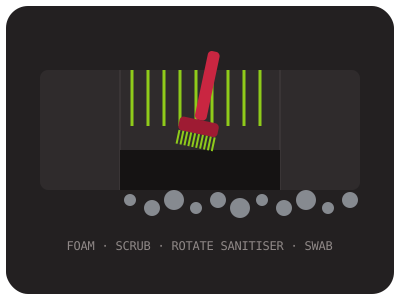
Step 4
Hard-to-reach areas and drains, cleaned by hand.
Listeria hides in wet, poorly designed niches, and above all in drains, so drains are cleaned as a routine, not as an afterthought. This is manual work. Detergents and alkaline cleaners lift soil, enzymatic cleaners with long-handled brushes reach down the run, and a hot water flush carries the load away. Abrasive tools such as stiff brushes disrupt and detach the biofilm that shelters the organism, because hand scrubbing reaches the nooks and crannies an automated system cannot.
Floor and wall junctions, plinths and machine feet, conveyor voids, hollow framework and standing-water niches are treated the same way. Where an area is too deep or inaccessible for a brush, steam cleaning penetrates and destroys the organism at source. Nothing is left to chance, because harbourage is exactly where a resident population survives.
Step 5
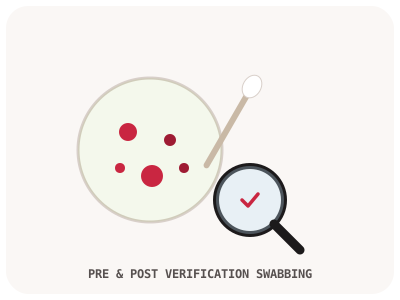
Verification swabbing, before and after.
Environmental swabbing is done after cleaning to verify effectiveness, not to hope for it. We swab before treatment to establish where the organism sits, and again afterwards to confirm it is gone. Comparing the two is the only honest proof that disinfection worked rather than merely disturbed the population. Results are documented in a dated pack, filed alongside your pest records in the My ASC Pest Hub, ready for an auditor, a customer or a certification body the moment they ask.
Proof It Works
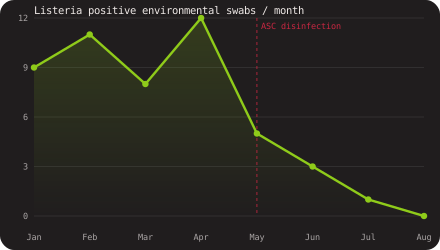
Positives falling to zero is the only result that counts.
A promise is not a result. Because ASC Food Safety Consultants swab before and after, every job produces a hard before-and-after picture: the environmental positives that triggered the intervention, and the clean swabs that follow it. Plotted over time, the trend is unmistakable, and it is captured in the My ASC Pest Hub so you and your auditor watch the same numbers. When a rising trend appears in a stubborn niche, it is visible early and acted on before it becomes a failure.
- Pre-treatment swabs establish the baseline and locate the harbourage
- Post-treatment swabs confirm the pathogen and load have genuinely been removed
- Trends tracked by area and date, so a returning niche is caught early
- A complete, dated evidence pack for auditors, customers and certification bodies
Food-Grade Chemicals & Stewardship
Powerful against pathogens, careful with people and product.
A disinfectant is only as safe as the hands that apply it and the advice that guides it. ASC uses food-grade chemicals throughout, chosen on the microbiological advice of ASC Food Safety Consultants and matched to the target organism and your surfaces. We apply them at the exact concentration and contact time the science demands, because an under-dosed or short-contact application gives a false sense of safety while leaving the pathogen alive. Rotating actives, for example quaternary ammonium compounds and peracetic acid, keeps organisms from adapting to a single chemistry. Where a product requires it, we follow with a food-safe potable rinse so no residue remains on a food-contact surface.
Food-grade chemistry
Products suited to food-contact environments, selected on microbiological advice, each with a current safety data sheet and a defined, validated use pattern.
Correct contact times
Concentration and dwell time matched to the target organism, with sanitiser rotation to prevent resistance and a potable rinse wherever the product demands it.
People, product, environment
Staff safety, product integrity and environmental impact guide every decision, from product choice to container disposal.
Why A Food Safety Specialist
We audit factories, so we know exactly what your result must show.
Most contractors sell fogging as a service. ASC delivers disinfection as a food safety outcome, because ASC Food Safety Consultants audit food factories, dairies, packhouses and kitchens against the world's toughest standards. We know what an auditor reads, what a laboratory report needs to say and how a positive Listeria result is expected to be closed out. That is why microbiological recommendations and verification swabbing are built into our method, and why every job leaves behind evidence you can defend. We integrate that evidence into the My ASC Pest Hub alongside your pest control records, so your environmental monitoring, your disinfection and your pest programme tell one consistent story.
- Diagnosis by ASC Food Safety Consultants, execution by the ASC disinfection division
- Only food-grade products applied by operators registered under Act 36 of 1947
- Correct concentrations, validated contact times and food-safe rinse where required
- Full method statements and swab results, filed and audit ready in the Hub
Where We Do It
The environments we disinfect.
Every one of these environments generates its own environmental load and its own harbourage, and every one is judged by a swab result. We disinfect them in conjunction with ASC Food Safety Consultants, so the treatment fits the risk.
Canteens
Staff canteens and dining facilities where high throughput, drains and warm servery lines keep environmental load high. Disinfection keeps the room inside specification and protects the people you feed.
Food manufacturing sites
Processing plants where conveyor voids, floor junctions and drains shelter Listeria. Targeted deep cleaning and verified disinfection protect product and pass the audit.
Commercial & industrial kitchens
Central kitchens and production kitchens where grease, moisture and drains breed pathogens. Fogging and hand work reach the niches a nightly clean cannot.
Catering facilities
Catering kitchens and preparation areas serving large numbers, where a single environmental failure carries wide public-health consequences. Verified disinfection removes the risk.
Camp sites & remote camps
Mining, construction and remote camps where kitchens and ablutions serve a captive population far from support. Scheduled disinfection keeps hygiene under control where an outbreak would be hardest to contain.
Hostels
Hostel kitchens, dining halls and communal facilities with high occupancy and shared surfaces. Disinfection controls the environmental load that high-traffic living generates.
Cold rooms
Chillers and cold stores where Listeria thrives in the cold, damp seals and drains that refrigeration cannot discourage. Specialist disinfection targets exactly these niches.
Packhouses
Fresh produce packhouses where water, wash lines and drains create constant harbourage. Verified disinfection protects produce destined for retail and export.
Breweries
Breweries and beverage plants where standing water, drains and warm, wet floors sustain microbial load. Disinfection keeps counts down and shelf life up.
When It Is Used
The moments a facility needs disinfection.
Specialised disinfection answers specific risks. Some are reactive, triggered by a result or an incident. The best programmes are proactive, keeping environmental load low so a failure never arrives in the first place.
After a positive result
An environmental swab has returned Listeria, Salmonella or an unacceptable count. Targeted disinfection and re-swabbing close the corrective action with evidence.
Before start-up or a new line
Commissioning a plant, restarting after downtime or installing a new line. Disinfection establishes a clean baseline before the first product runs.
During a deep-clean shutdown
Planned maintenance windows are the ideal time to treat drains and harbourage that are inaccessible while equipment is running.
After a pest incident
Where rodents, flies or birds have contaminated an area, disinfection removes the microbial load their presence leaves behind, alongside the pest work itself.
Seasonal high-risk periods
Warm, humid months and peak production put extra pressure on hygiene. Scheduled disinfection keeps the environment in control when risk is highest.
As a scheduled programme
Regular, planned disinfection built into your master cleaning schedule keeps load consistently low, so audits and swabs pass by design, not by luck.
My ASC Pest Hub
Disinfection evidence, filed next to your pest records.
Paper certificates get lost and never tell the whole story. My ASC Pest Hub at hub.ascpestcontrol.co.za captures every disinfection service digitally: what we treated, the food-grade product we used, the contact time, the safety data sheet and the pre and post swab results. Because your pest programme lives in the same portal, your auditor sees one integrated evidence trail. When a customer or certification body asks how you control environmental pathogens, you generate a complete, current pack in seconds.
Swab result tracking
Pre and post verification results captured by area and date, so a rising trend or a stubborn niche is visible and acted on early.
One-click audit packs
Method statement, product register, safety data sheets, contact times and swab evidence bundled into a defensible file in seconds.
Integrated with pest data
Disinfection and pest control records sit side by side, so your environmental monitoring tells one consistent, credible story.
Where This Fits
Part of a complete food safety programme.
Disinfection works best alongside a mapped pest programme and disciplined environmental monitoring. Explore how it connects to the rest of what we do.
Food & Beverage Pest Control
Audit-ready IPM aligned to BRCGS, FSSC 22000, SANS 10049 and GLOBALG.A.P. The pest programme that disinfection sits beside.
Explore →Commercial Pest Control
Integrated Pest Management for premises of every kind across South Africa, run by public health specialists.
Explore →Listeria in the Eastern Cape Dairy Industry
Why environmental pathogens like Listeria monocytogenes matter so much in dairy, and how a facility keeps them in check.
Read →Free Resources
Printable checklists, logs and self-assessments for cleaning, disinfection and environmental monitoring, built by food safety auditors.
Explore →Disinfecting Canteens & Industrial Kitchens
The drain, floor and equipment junctions that matter most in a busy staff canteen or industrial kitchen, and how they get verified clean.
Read →How Our Team Is Trained
Trained in the standards your disinfection is measured against.
Our disinfection method is credible because the people behind it understand food safety, not only chemicals. Our team is trained across the standards that judge your environmental control.
Questions
Disinfection services FAQ
How is ASC disinfection different from routine cleaning?
Routine cleaning removes visible soil, product residue and organic matter, and it is a daily job your own team should own. ASC disinfection is a separate, specialist intervention delivered in conjunction with ASC Food Safety Consultants. First, ASC Food Safety Consultants conduct environmental monitoring, risk assessment and inspection to identify the pathogen and its harbourage, then produce microbiological recommendations. The ASC disinfection division then performs thorough cleaning and disinfection following those recommendations, targeting drains, floor and wall junctions, conveyor voids and standing water niches where Listeria monocytogenes, Salmonella and E. coli hide. Food-grade chemicals are used throughout, and pre and post verification swabbing proves the pathogen is gone.
Do you swab and provide laboratory results before and after disinfection?
Yes. Verification is built into the ASC method, not sold as an extra. ASC Food Safety Consultants swab before treatment to map where the pathogen or general load actually sits, the disinfection division treats to that map, and we swab again afterwards to confirm the work succeeded. Positive results falling to zero is the proof an auditor, a customer and a laboratory actually read. Results are documented and loaded into the My ASC Pest Hub alongside your pest records, so you hand over a complete, dated evidence pack rather than an unverified promise.
Why is ASC uniquely qualified to control environmental pathogens like Listeria?
Because ASC combines two disciplines most contractors cannot. ASC Food Safety Consultants bring the microbiological expertise: environmental monitoring, risk assessment, harbourage identification and written microbiological recommendations. The ASC disinfection division brings the specialist cleaning: manual scrubbing of drains, foam and gel penetration of hard-to-reach niches, rotation of sanitisers to prevent resistance, steam for inaccessible areas, and verification swabbing to prove the result. Listeria hides in wet, poorly designed niches, above all in drains, and only a partnership of microbiological advice and specialist cleaning reaches it and proves it is gone.
Why do drains matter so much, and how do you clean them?
Drains are the single most important Listeria harbourage in a food facility, because they are permanently wet, out of sight and rarely cleaned properly. We treat them as a routine, by hand. Detergents and alkaline cleaners lift soil, enzymatic cleaners with long-handled brushes reach down the run, and a hot water flush carries the load away. Stiff, abrasive brushes disrupt and detach the biofilm that shelters the organism, because hand scrubbing reaches the nooks and crannies an automated system cannot. Where an area is too deep or inaccessible for a brush, steam cleaning penetrates and destroys the organism at source.
Are your chemicals safe to use around food and food-contact surfaces?
Yes, when the work is done correctly, which is exactly the point of using a specialist. We use food-grade chemicals suited to food-contact environments, chosen on the microbiological advice of ASC Food Safety Consultants, applied at the concentration and contact time they require, and rotated to prevent resistance. Where a product demands it, we follow with a food-safe potable rinse so no residue remains. Every application is documented in a method statement with the safety data sheet, so your file proves the work was both effective and safe for staff and product.
How much does specialist disinfection cost?
Cost depends on the area and number of zones to be treated, whether verification swabbing is included before and after, and how urgent the response is following a positive result. A single drain and junction treatment is priced differently from a full plant-wide response to a confirmed Listeria finding. We quote after understanding the swab results and the area involved.
How quickly can you respond to a positive Listeria or Salmonella result?
Environmental positives are treated as urgent. Once you share the swab result and the affected area, we schedule the risk assessment and treatment as a priority, because the longer a confirmed pathogen sits in a drain or void, the further the biofilm establishes and the higher the risk of product contact.
Will disinfection disrupt production?
We plan treatment around your production schedule wherever possible, working zone by zone or during a planned shutdown so the wider operation continues. For a confirmed positive in an active production area, a short, controlled stoppage of that specific zone is usually the safer and faster route to a clean verification result than working around live production.
Next Step
Book a disinfection and swab assessment.
Book a no-obligation site assessment. A registered specialist will walk your premises and design a programme around your risk.