
Public Health / Biting Insects
Bed bug control that clears the room and protects your reputation.
A bed bug infestation is not a hygiene failure, it is a hitchhiker problem, and one review can undo years of goodwill. ASC finds every harbourage, treats with heat and targeted product, and does it discreetly so your guests never know there was an issue. This is how professional bed bug control actually works.
Why It Matters
Bed bugs spread fast, bite everyone and travel on your guests.
The common bed bug, Cimex lectularius, is a small, flat, reddish-brown insect that feeds on human blood at night and hides by day in mattress seams, bed frames, skirtings, headboards and behind loose wallpaper. It does not care how clean a room is: it arrives in luggage, on second-hand furniture or through a shared wall, and a single mated female can start a new population. Bites cause itchy welts, broken sleep and real distress, and in a guesthouse, hotel or student residence, word travels faster than the insect does. For a home, the emotional toll and the cost of replacing furniture add up quickly if the problem is not caught early and treated properly.
Reputation risk
In hospitality, one online review naming bed bugs can cost more than the infestation itself. Guests photograph bites and post room numbers. Fast, discreet, documented control protects the brand.
They spread
Left untreated, bed bugs move along skirtings and through wall voids into adjoining rooms. What starts in one room becomes a floor-wide problem, and the cost of control rises with every week of delay.
Human distress
Bites, itching and lost sleep affect wellbeing and, for staff and residents, quality of life. Bed bugs are a genuine public-health nuisance, not just an inconvenience.
Resistant populations
Many South African bed bug populations resist common over-the-counter insecticides. Throwing supermarket sprays at them selects for the survivors and makes the next treatment harder.
Know The Signs
Six signs of bed bugs, before the bites start.
The clearest signs of bed bugs are itchy welts appearing in a line or cluster after sleep, small rust-coloured blood spots on sheets, dark pin-sized faecal marks along mattress seams and headboards, tiny pale eggs and shed skins in cracks and seams, a sweet musty odour in a heavily infested room, and live flat, reddish-brown insects found in the mattress seam or bed frame itself. Any one sign is worth investigating; two or more together is a strong indication of an active infestation.
Bite patterns
Itchy welts appearing in a line or small cluster, often on arms, shoulders or legs after sleep, are a classic bed bug bite pattern, though not everyone reacts to bites visibly.
Blood spots
Small rust or reddish-brown spots on sheets or the mattress are left when a feeding bed bug is crushed during the night.
Faecal marks
Dark, pin-sized spots along mattress seams, headboards and skirtings are digested blood, left along the routes bed bugs travel.
Eggs & shed skins
Tiny pale eggs and translucent shed skins wedged into seams and cracks confirm an established, breeding population, not a single hitchhiker.
Musty odour
A sweet, musty smell in a heavily infested room comes from the insects' scent glands and usually means a large, well-established population.
Live insects
Flat, reddish-brown insects about the size of an apple seed, found in mattress seams, bed frames or behind headboards, confirm the infestation directly.
Spotted any of these signs? Discretion matters here — WhatsApp us confidentially or request an assessment before it spreads to adjoining rooms.
Why DIY Fails
The four reasons a can of spray never solves a bed bug problem.
You cannot find them all
Bed bugs hide in cracks a millimetre wide, inside frames, behind cornices and under carpet edges. If a single harbourage is missed, the population rebuilds. A trained inspection finds what a homeowner cannot.
Eggs survive sprays
Eggs are cemented to surfaces and shrug off many contact insecticides. A treatment that ignores the egg stage simply resets the clock, and adults emerge a week or two later.
Sprays scatter them
Repellent aerosols drive bed bugs deeper into voids and out into adjoining rooms, turning a contained problem into a spreading one. This is the most common way DIY makes things worse.
Resistance is real
Populations exposed to the same supermarket actives for years have developed resistance. Professionals rotate modes of action and add non-chemical heat so resistance is not a way out for the insect.
Our Method
Detection, heat and targeted treatment, then a follow-up that confirms the clear.
1. Detection and inspection
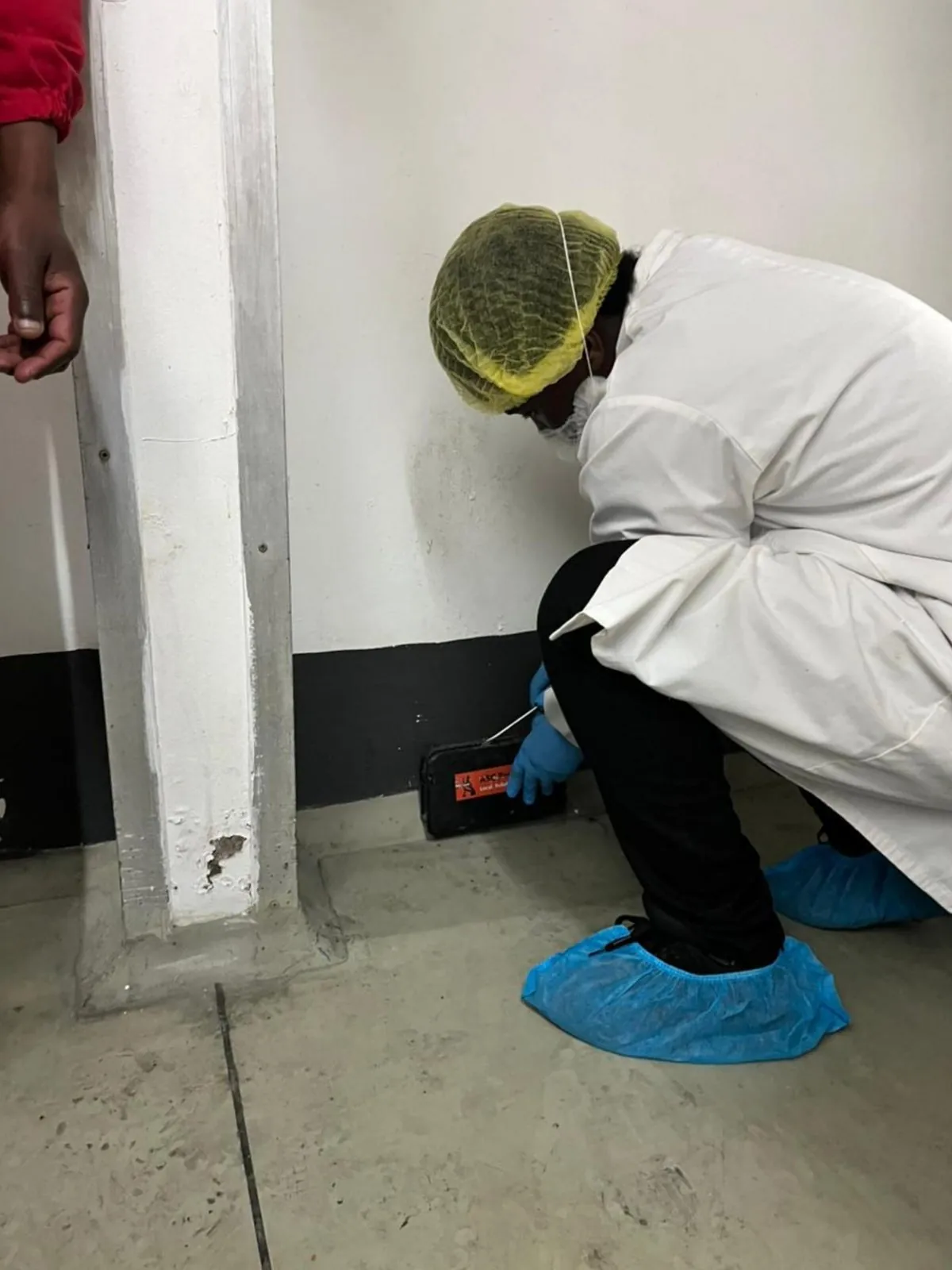
A methodical inspection of beds, frames, furniture, skirtings and adjoining rooms to confirm bed bugs, map every harbourage and grade the infestation. We identify Cimex lectularius positively before we treat, so effort goes where it is needed.
2. Heat treatment
Where appropriate, controlled heat raises the room and its contents to a temperature lethal to bugs and eggs at every stage, reaching into voids and seams and leaving no residue on bedding.
3. Targeted chemical treatment
Registered residual products applied precisely to harbourages and perimeters, using rotated modes of action to defeat resistance, never a blanket fog of a bedroom.
4. Follow-up and verification
A return visit to catch any nymphs that hatched after the first treatment and confirm the room is clear. We can leave interceptors and monitors so re-infestation is caught early.
Guesthouses and hotels
Room-by-room programmes scheduled around occupancy, with unbranded vehicles on request and a confidential digital record for management, so control never becomes public.
Residential
Discreet, thorough treatment for homes and flats, with clear preparation guidance and advice on protecting mattresses and preventing the next hitchhiker.
How To Prepare
Good preparation makes the treatment work first time.
A little preparation before we arrive lets us reach every harbourage and gets the best result from one visit. Your specialist will send a room-specific checklist, but in general we ask that you:
- ✓ Strip bedding and bag it for a hot wash and tumble dry
- ✓ Reduce clutter around and under the bed so harbourages are reachable
- ✓ Do not move items to another room, which just spreads the problem
- ✓ Vacuum floors and edges, then seal and discard the vacuum bag outside
- ✓ Give clear access to beds, headboards and skirtings on every wall
- ✓ Follow the re-entry guidance we give for any treated area
The ASC Difference
Public-health specialists who treat the problem, not just the symptom.
Bed bug control is a public-health job. It calls for accurate identification, an understanding of the insect's biology and resistance, and registered products used with care in rooms where people sleep. ASC is a food safety specialist owned pest control company, so diligence and documentation are built into how we work. We audit and inspect premises for a living, and we bring that same discipline to a guest room: find every harbourage, choose the least-toxic effective method, apply it precisely, and record exactly what was done.
Every service is captured in the My ASC Pest Hub portal: a confidential digital record of each treated room, live trend graphs across a property, and one-click packs for insurers or management. For a multi-site hospitality group, that means you can see bed bug activity across every property at a glance, without a single sheet of paper in a public corridor.
- ✓ SAPCA member ASC797, registered PCOs under Act 36 of 1947
- ✓ Heat plus targeted product to beat resistant populations
- ✓ Discreet, unbranded service on request for hospitality
- ✓ Confidential digital records via My ASC Pest Hub
Credentials
Registered, accredited and trained to a food safety standard.
Our technicians are trained well beyond the minimum required of a pest control operator, so the person treating your guest room understands both the insect and the standard your business is held to.
Chemical Stewardship
Least-toxic first, in rooms where people sleep.
Bed bug treatment happens in the most personal space there is, a bedroom, so care for people, product and the environment is not optional. We lead with heat, a non-chemical method that leaves no residue, and reach for registered residual products only where they are needed and only at harbourages. Every product we use is registered under Act 36 of 1947 for the target and the setting, applied by a registered pest control operator at the correct dose, with clear re-entry times and a record on your file. Prevention comes first: monitors, interceptors and staff training reduce how often chemical is ever required. This is Integrated Pest Management, and it is the same disciplined approach our food industry clients depend on.
Read: how Integrated Pest Management puts prevention first →
Read: what Act 36 of 1947 requires of every pesticide used →
Where we do this
Bed bug control across Gqeberha and Johannesburg
Beachfront hotels and guest houses in Port Elizabeth (Gqeberha) and the hotel, lodge and staff-accommodation market across Johannesburg face the same problem: bed bugs travel on luggage and belongings, so they are not a hygiene failure and no amount of cleaning prevents them. What matters is speed, discretion and a follow-up visit that confirms the clear before the room goes back into service.
Nelson Mandela Bay: South End, Newton Park, Walmer, Summerstrand, Humewood, North End, Korsten, Deal Party, Struandale, Perseverance, Markman, Coega IDZ, Kariega (Uitenhage), Despatch.
Greater Johannesburg: Sandton, Randburg, Rosebank, Midrand, Fourways, Roodepoort, Soweto, Edenvale, Bedfordview, Germiston, Alberton, Boksburg, Benoni, Kempton Park, plus City Deep, Isando, Longmeadow, Linbro Park, Wadeville and Alrode.
Pest control in Port Elizabeth (Gqeberha) · Pest control in Johannesburg · East London · Eastern Cape · Gauteng
Questions
Bed bug control FAQ
Why does DIY bed bug treatment usually fail?
Bed bugs hide in cracks a millimetre wide, their eggs are cemented to surfaces and resist many contact sprays, and populations in South Africa have developed resistance to common over-the-counter insecticides. Retail aerosols kill a few visible bugs and scatter the rest deeper into the room, so the infestation spreads to adjoining rooms and comes back stronger. Effective control needs a thorough inspection, the right combination of heat and registered residual products, treatment of every harbourage, and a follow-up to catch newly hatched nymphs.
How does heat treatment for bed bugs work?
Heat treatment raises the temperature of a room and its contents to a level lethal to bed bugs and their eggs at every life stage, reaching into the cracks, seams and voids where they hide. Because it is a physical treatment it leaves no residue on bedding or surfaces and does not rely on the insect walking across a treated area, which makes it powerful against resistant populations. ASC combines heat with targeted residual products at the perimeter so that any survivors are controlled and re-infestation is prevented.
How discreet is your service for guesthouses and hotels?
Discretion is central to how we work with hospitality clients. Our vehicles and technicians are unbranded on request, we schedule around occupancy, and we treat rooms room by room so operations continue with minimal disruption. Every service is documented privately in the My ASC Pest Hub portal, giving management a confidential record and trend view without a paper trail in public areas.
How do I know I have bed bugs and not another biting insect?
The classic signs are itchy welts, often in a line, small blood spots and dark faecal marks on sheets, mattress seams and headboards, and a positive find of live Cimex lectularius or their shed skins. Our inspection confirms the species before treatment, because fleas, mites and mosquitoes need very different control.
How many visits will it take?
Most infestations need an initial treatment and at least one follow-up to deal with eggs that hatch after the first visit. Heavier or multi-room infestations may need more. We agree a clear plan up front and confirm the clear at the final visit.
How much does bed bug treatment cost?
Cost depends on the treatment method (heat or residual chemical), the number of rooms affected, how established the infestation is, and whether it is a single household room or a multi-room hospitality property. We quote after an inspection, because the extent of the infestation, not just the room size, drives both the method and the price.
Can bed bugs be completely eliminated in one treatment?
Rarely with chemical treatment alone, because eggs already laid can hatch after the first visit, which is why a follow-up is standard practice. Heat treatment kills all life stages, including eggs, in a single visit if every harbourage reaches the required temperature, which is why we often combine heat with a residual perimeter treatment and a follow-up inspection to confirm the clear.
Do bed bug bites need medical treatment?
Most bed bug bites resolve on their own with itch relief and do not require medical treatment, though secondary infection from scratching can occur and should be seen by a doctor. Bed bugs are not currently known to transmit disease, but the bites, lost sleep and anxiety they cause are real and worth treating seriously by clearing the infestation rather than just the symptoms.
Can I bring bed bugs home from a hotel or with second-hand furniture?
Yes, this is the most common way bed bugs spread. They hide in luggage seams, folded clothing and the frames or upholstery of second-hand furniture, then establish once unpacked at home. Inspecting hotel mattress seams before unpacking, and checking second-hand furniture carefully before bringing it inside, are the two most effective prevention habits.
Next Step
Book a discreet bed bug assessment.
A registered specialist will inspect the affected rooms, confirm the infestation and design a heat and targeted treatment plan around your property and your privacy.