
An abattoir is one of the most demanding environments in the entire food chain. Warm blood and fat, constant water, refrigerated halls, complex stainless equipment and unrelenting throughput combine to create exactly the conditions that foodborne pathogens exploit. So when routine environmental monitoring returns a positive for Listeria monocytogenes, Salmonella or E. coli, it is not a sign that the plant is failing. It is a sign that the monitoring is working, and that the next step, corrective disinfection, has to be done properly.
The critical word is verified. In a slaughterhouse the standard daily wash-down keeps routine numbers in check, but it is not designed to remove an established environmental strain hiding in a drain or a floor junction. That takes a targeted, food-safety-led deep clean, proven with swabs. This article explains how the ASC model handles a positive result in a red meat or poultry abattoir, why drains and floor junctions dominate the problem, and how the work sits within the framework of the Meat Safety Act 40 of 2000.
Key takeaways
- A positive environmental result is monitoring doing its job. The measure of a good abattoir is not zero positives, it is what happens next: a verified corrective disinfection.
- Listeria monocytogenes establishes persistent harbourage in drains, drain covers, wall-floor junctions, hollow equipment legs and cracked epoxy. These Zone 3 and Zone 4 niches, not the food contact surfaces, are usually the real reservoir.
- The ASC model separates science from labour: consultants run the environmental monitoring, risk assessment and microbiological recommendations, then the disinfection division deep cleans the harbourage with food-grade chemistry, before pre and post swabbing proves the result.
- Under the Meat Safety Act 40 of 2000, acting on a detection with documented, verified corrective action protects both the product and the abattoir's registration.
Why abattoirs are a pathogen's ideal habitat
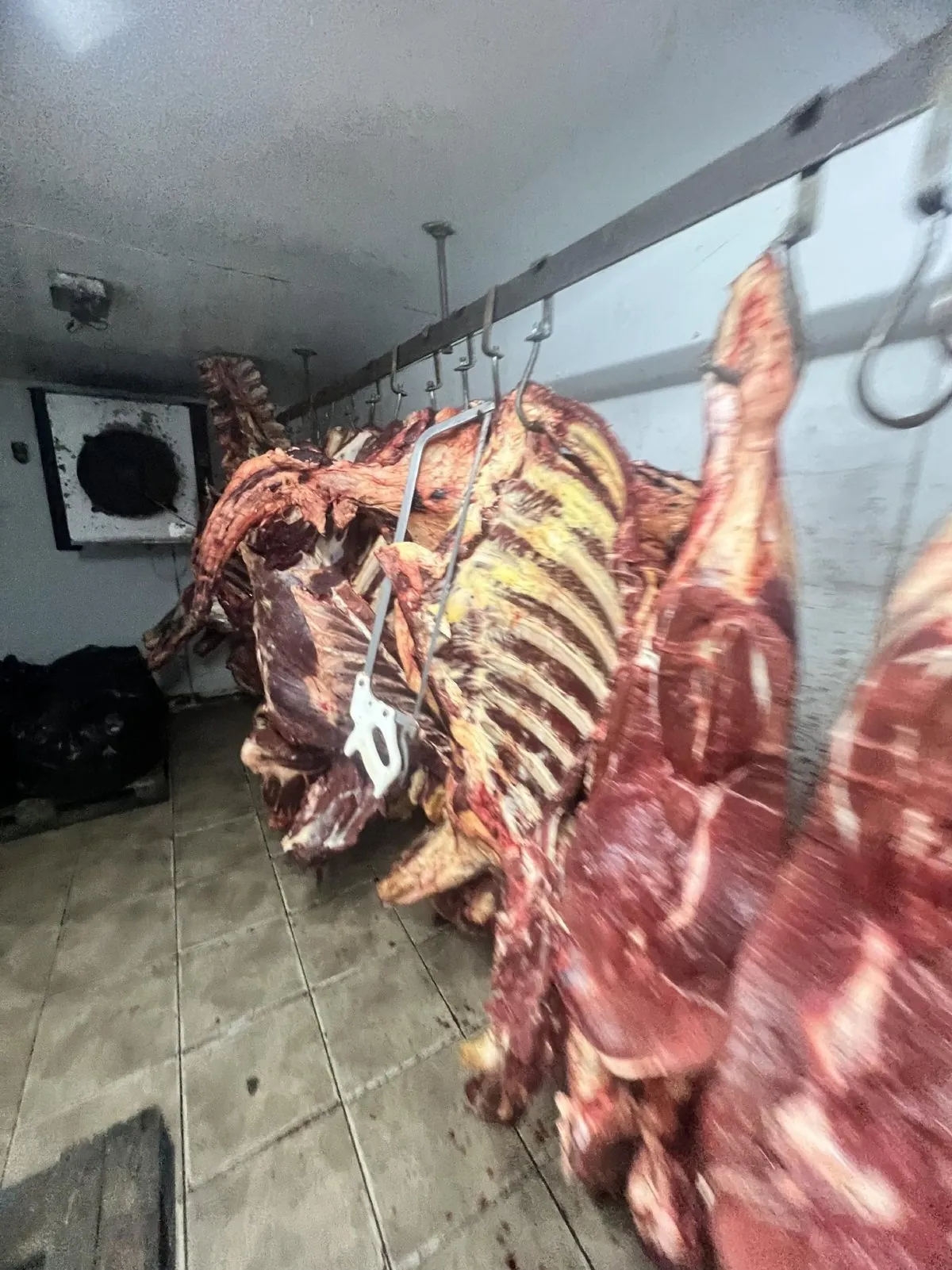
Three organisms dominate the abattoir risk picture, and each behaves differently. E. coli, as a hygiene and faecal indicator, tells you about process control and cross-contamination at the point of dressing and evisceration. Salmonella arrives with the animals and can spread through the line, hide in scald tanks and defeathering equipment in poultry plants, and colonise wet equipment. Listeria monocytogenes is the environmental specialist: it does not need the animal at all once it is established. It lives in the fabric of the building, particularly in the cold, wet chilling and deboning areas, and it is the organism most likely to survive month after month if the harbourage is not found and destroyed.
What ties them together is the physical environment. Fat and protein soil shield bacteria from disinfectant. Constant moisture keeps biofilm alive. Refrigeration slows nothing about Listeria, which grows happily at chilling temperatures. And the sheer complexity of abattoir plant, with its hollow legs, blind fasteners, conveyor housings and kilometres of drainage, gives an organism countless places to hide from a hose. A routine clean lowers the surface count. It does not evict a resident strain.
Monitoring and risk assessment come first
The ASC approach never starts with chemicals. It starts with understanding the positive. ASC Food Safety Consultants carry out the environmental monitoring and risk assessment that turns a single positive into a map: where the organism is, how far it has spread, and which zones are driving it.
The plant is mapped into hygiene zones. Zone 1 is direct food contact, the surfaces a carcass or cut touches. Zone 2 is equipment and surfaces adjacent to food contact. Zone 3 is the wider processing environment, floors, walls and equipment exteriors. Zone 4 is the periphery and the drains. Pre-cleaning vector swabs trace a positive back through the zones to its source, because a Zone 1 finding is frequently the downstream symptom of a Zone 4 harbourage that is aerosolising or splashing onto product. The consultants then issue microbiological recommendations: which sites need dismantling, which chemistry and contact times are required against biofilm, and what the verification plan must prove. Only then does the disinfection division mobilise. Skipping this diagnosis is how plants end up chasing the same positive for a year.
Drains and floor junctions: the heart of the problem
If there is one lesson from decades of Listeria investigations, it is that the answer is usually in the drain. Floor drains, drain covers and gullies are permanently wet, rarely dismantled, hard to reach and full of nutrient-rich organic matter. They are the single most common reservoir of persistent Listeria monocytogenes in meat plants. Close behind are the wall-floor junctions, the coving where cracked epoxy traps moisture and soil, and the hollow legs and feet of tables and conveyors that hold water no hose ever flushes out.
These are Zone 3 and Zone 4 sites, and they are exactly what daily sanitation is not built to clean. A resident strain in a drain will survive the nightly wash indefinitely, then reseed the room every day through splash, foot traffic, cleaning water and aerosol. This is why an ASC corrective disinfection treats drains as a primary target, not a finishing touch: covers lifted and scrubbed, gullies cleared and disinfected, junctions and cracks treated directly, and equipment voids opened up. Clear the harbourage and the Zone 1 positives resolve. Ignore it and no amount of surface fogging will hold.
The corrective disinfection protocol
A targeted deep clean of chilling halls, deboning rooms and slaughter floors follows a disciplined sequence, carried out during a production stop so the work can be thorough. This is the disciplined process our disinfection services follow on every corrective clean.
- Dismantle and expose. Open equipment, lift drain covers, remove guards and access the harbourage identified in the swab map. You cannot disinfect what you cannot reach.
- Foam detergent. Apply a food-grade alkaline foam to lift fat and protein soil and to soften biofilm. This step is what allows the disinfectant to actually contact the bacteria.
- Mechanical action and rinse. Scrub the hard niches, then rinse to remove loosened soil and detergent so it does not neutralise the disinfectant.
- Food-grade disinfectant at validated contact time. Apply a disinfectant proven against Listeria, Salmonella and E. coli, honouring the full label contact time. Rotate chemistry where the consultants advise, to prevent tolerance in biofilm.
- Drain and junction focus. Treat every drain, gully, cove and crack directly, then apply a residual drain treatment where recommended.
- Chilling hall considerations. Use chemistry rated for low-temperature performance in cold rooms, since Listeria is entirely at home at chilling temperatures and many disinfectants slow at 4 degrees.
- Dry, then verify. Allow drying and take post-cleaning verification swabs before the area returns to production.
Verification and the indicator family
Verification is the whole point. ASC uses paired swabbing: pre-cleaning swabs to locate the organism and set the baseline, and post-cleaning verification swabs from the same sites plus additional risk points once the area has dried. A negative for the target pathogen at the harbourage sites is the primary proof.
Alongside the pathogen result, ASC tracks the Enterobacteriaceae indicator family. This group, which includes Salmonella and E. coli, is the standard hygiene indicator for meat environments. A low and stable Enterobacteriaceae count across the zones tells you the general hygiene condition is under control and that the corrective clean has genuinely reset the environment, not just knocked out one organism at one point. Together, a negative pathogen result and a low indicator count give the abattoir defensible evidence that the affected area is fit to return to production, exactly the evidence a registered veterinary authority will expect to see.
The Meat Safety Act context
Every registered abattoir in South Africa operates under the Meat Safety Act 40 of 2000 and its associated regulations for red meat and poultry. The Act requires that meat is not exposed to contamination and that every abattoir runs a documented Hygiene Management System, overseen in practice by the registered veterinary authority responsible for the plant.
Within that framework, an environmental monitoring programme is not optional extra effort, it is how a plant demonstrates that its hygiene system actually works. And a positive result triggers a clear duty: investigate, correct and verify. A food-safety-led corrective disinfection, documented from the pre-cleaning swab map through to the post-cleaning verification result, is precisely the record that proves corrective action was taken and was effective. That record protects the product, protects the consumer and protects the abattoir's registration and reputation. Treating a positive as an inconvenient wash job, rather than a verified corrective process, is the fast route to a recall and a suspended registration.
Risk-based monitoring frequency
ASC sets sampling and verification frequency using a probability by severity risk matrix, so effort lands where it matters. Probability draws on plant history, previous results, equipment age and drainage design. Severity reflects the consequence of a failure at that point: a Zone 1 food contact surface, a chilling hall holding ready-to-dispatch carcasses, or a deboning room producing cuts for direct sale carries far higher severity than a peripheral corridor. A deboning room with a recent Listeria history and complex, ageing equipment sits high on both axes and earns intensive, frequent verification. This keeps the programme proportionate and auditable, and ensures the plant is monitoring hardest exactly where a failure would do the most harm.
Frequently asked questions
Why do abattoir drains and floor junctions matter so much for Listeria control?
Listeria monocytogenes establishes persistent harbourage in wet, cool, hard-to-clean niches: floor drains, drain covers, wall-floor junctions, hollow equipment legs and cracked epoxy. It forms biofilm and survives routine daily cleaning for months. Standard sanitation focuses on food contact surfaces and misses these Zone 3 and Zone 4 reservoirs, which then recontaminate product. Targeted deep cleaning of these sites is what clears a resident strain.
What does the Meat Safety Act require after a pathogen is detected?
The Meat Safety Act 40 of 2000 requires every registered abattoir to run a Hygiene Management System and to ensure meat is not contaminated. A detection of Listeria monocytogenes, Salmonella or E. coli must be acted on: investigate, disinfect and verify before the area returns to production. A documented, verified deep clean demonstrates that corrective action to the registered veterinary authority and protects the registration.
How is targeted abattoir disinfection different from the daily wash-down?
The daily wash-down is production sanitation that keeps routine numbers down on food contact surfaces. Targeted disinfection after a positive is directed by pre-cleaning swabs at the specific harbourage, uses dismantling, foam detergents and validated food-grade chemistry against biofilm, treats drains and voids that daily cleaning never reaches, and is proven by post-cleaning verification swabs. It removes a resident reservoir rather than lowering a shift count.
Can chilling halls be disinfected effectively given the cold?
Yes, but chemistry choice matters. Many disinfectants slow markedly at 4 degrees, while Listeria grows perfectly well at chilling temperatures. ASC consultants specify disinfectants rated for low-temperature performance and adjust contact times for cold rooms, so the kill is real and not just assumed from a room-temperature label figure.
Do you need to stop production for a corrective deep clean?
For a genuine harbourage clean, yes. Dismantling equipment, lifting drain covers and honouring full contact times cannot be done around a running line. ASC plans the work into a production stop or extended downtime and sequences it to return the affected area to service as quickly as verification allows, with the swab results as the gate.