
Ask most butchery owners how they clean, and they will describe a genuinely diligent routine: surfaces wiped, blades rinsed, floors hosed, sanitiser sprayed at the end of the day. It looks thorough, and for keeping routine numbers down it usually is. But when environmental monitoring returns a positive for Listeria monocytogenes, a wipe down is not the answer, because the organism is almost never on the surface you wiped. It is inside the machine, down the drain and under the coving, in the places a cloth never reaches.
A retail butchery or a meat processing room is a small space packed with exactly the equipment Listeria loves: mincers, bandsaws, slicers, vacuum packers, cold rooms and floor drains, all handling raw meat and fat under constant moisture. This article explains why clearing a positive takes far more than a wipe down, how the ASC model deep cleans the harbourage that matters, why sanitiser rotation is not optional, and how it all sits within Regulation R638.
Key takeaways
- After a Listeria monocytogenes positive, surface wiping is not disinfection. The organism harbours inside mincers and bandsaws, in table seams and in drains, not on the surfaces you can see.
- The ASC model splits the science from the labour: consultants run the environmental monitoring, risk assessment and microbiological recommendations, then the disinfection division strips, deep cleans and disinfects the equipment and drain harbourage with food-grade chemistry.
- Sanitiser rotation between chemistries with different modes of action stops biofilm adapting to a single product, which is a common reason a daily clean quietly fails.
- Pre and post verification swabbing, tracking the pathogen and the Enterobacteriaceae indicator family across the hygiene zones, proves the room is clean and evidences your Regulation R638 duties.
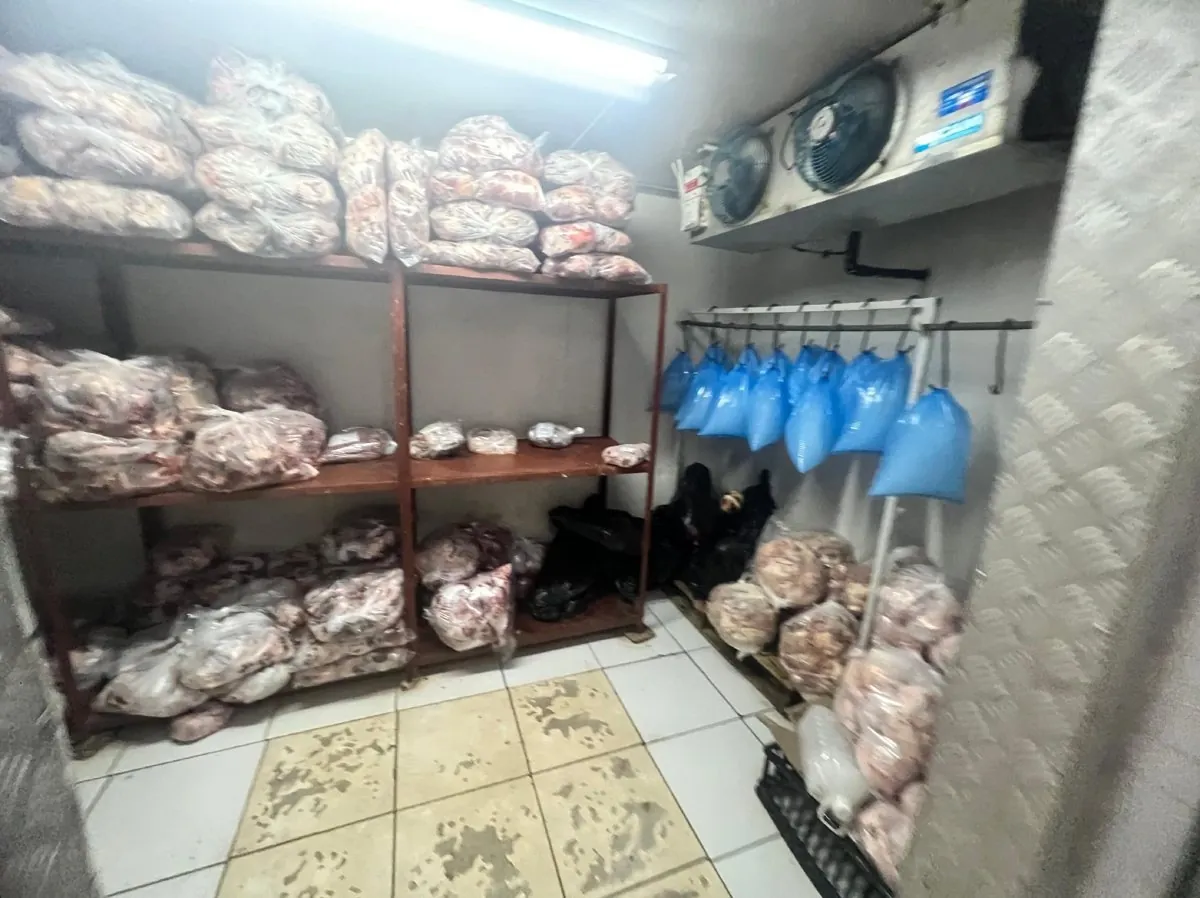
Where Listeria actually hides in a butchery
Listeria monocytogenes is a survivor. It grows at cold-room temperatures, tolerates salt and drying better than most pathogens, and above all it forms biofilm in protected niches where cleaning chemicals struggle to reach. In a butchery those niches are predictable, and none of them is a flat, visible surface.
- Mincers. The worm, the plate, the throat and the housing are wet, warm with friction and packed with fat and protein. Fine tissue works into every thread and seam. A rinse cleans the visible parts and leaves the harbourage untouched.
- Bandsaws. Blade guides, the wheels the blade runs over, the internal frame and the guard cavities collect a paste of bone dust, fat and meat that stays moist and rarely gets dismantled.
- Slicers and vacuum packers. Blade hubs, guards, seal bars and hinges trap residue in places a cloth cannot follow.
- Table and equipment seams. Welds, joins, and the underside of cutting surfaces hold moisture and soil out of sight.
- Drains and coving. Floor gullies and the wall-floor junction are the classic Listeria reservoir, permanently wet and rarely opened up.
Every one of these is a place a nightly wipe cannot clean. That is why a positive result is a signal to strip and deep clean, not to wipe harder.
Monitoring and recommendations come first
The ASC approach begins with the science. Before any chemical is applied, ASC Food Safety Consultants carry out environmental monitoring and risk assessment to locate the organism precisely and understand how it is moving through the room.
The butchery is mapped into hygiene zones: Zone 1 for direct food contact surfaces such as the mincer plate and cutting boards, Zone 2 for adjacent equipment surfaces, Zone 3 for the wider room including equipment exteriors and floors, and Zone 4 for the periphery and drains. Pre-cleaning swabs trace the positive to its source, which is frequently a Zone 4 drain or a Zone 3 machine interior that keeps recontaminating the Zone 1 surfaces. The consultants then issue microbiological recommendations: which equipment must be dismantled, which chemistry and contact times to use, and what the verification must prove. Only then does the disinfection team begin. This diagnosis is the difference between clearing the organism and chasing it around the room for months.
The deep clean, step by step
A proper corrective disinfection of a butchery is a controlled process, carried out after hours so the equipment can be taken apart and given full contact time. This is precisely the work our disinfection services carry out after hours.
- Strip down. Dismantle mincers, bandsaws, slicers and packers to component level, following the manufacturer's guidance, so every internal surface is exposed.
- Detergent and soak. Apply a food-grade detergent to lift fat and protein soil from components and housings, soaking parts where needed to soften baked-on residue and biofilm.
- Mechanical cleaning. Brush and scrub threads, seams, blade guides and drain gullies. Mechanical action is what physically breaks biofilm apart so the disinfectant can work.
- Rinse. Remove loosened soil and detergent so it cannot neutralise the disinfectant.
- Food-grade disinfectant at full contact time. Apply a disinfectant proven against Listeria to every component and surface, honouring the complete label contact time rather than a quick spray and wipe.
- Drain and coving treatment. Deep clean and disinfect drains, gullies and the wall-floor junction directly, then apply a residual drain treatment where recommended.
- Reassemble clean, then verify. Rebuild the equipment on sanitised surfaces and take post-cleaning verification swabs before the room returns to use.
Why sanitiser rotation matters
One of the quiet reasons a butchery keeps returning positives despite diligent daily cleaning is reliance on a single sanitiser, used the same way, day after day, for years. Biofilm communities in drains and equipment are not passive. Over time they adapt to a constant chemistry and become more tolerant of it, so the daily clean gradually stops working at exactly the harbourage points that matter, long before anyone notices.
The answer is rotation. ASC consultants specify an alternation between sanitisers with genuinely different modes of action, for example a quaternary ammonium based product alternated on a defined schedule with a peroxide or chlorine based one, so no single biofilm community can settle in. Crucially, the rotation is not guesswork. The chemistries, the concentrations, the contact times and the schedule are set in the microbiological recommendations and then confirmed by verification swabbing, so the programme is proven to work rather than assumed to. This is the kind of detail that separates a food-safety-led disinfection from a generic cleaning contract.
Verification and the indicator family
A butchery is clean when the swabs say so, not when it looks tidy. ASC uses paired swabbing: pre-cleaning swabs to find the organism and set the baseline, and post-cleaning verification swabs from the same sites plus additional risk points once the room has dried and the equipment is reassembled. Sample sites include the mincer plate and worm, bandsaw internals, slicer hubs, table seams, drains and coving.
Alongside the pathogen result, ASC tracks the Enterobacteriaceae indicator family. This group is the standard hygiene indicator for meat handling: a low and stable count across the zones confirms that general hygiene is under control and that the deep clean has genuinely reset the room, not merely removed one organism from one point. A negative for Listeria monocytogenes at the harbourage sites, together with a low indicator count, is the evidence the butchery is fit to resume production, and the record that demonstrates due diligence.
Regulation R638 and your duties
Every food premises in South Africa, including a retail butchery, operates under Regulation R638 of 2018, made under the Foodstuffs, Cosmetics and Disinfectants Act 54 of 1972. R638 sets the general hygiene requirements for food premises and the transport of food. It requires that premises, equipment and surfaces be kept clean and in good order, that food is protected from contamination, and that the business holds a valid Certificate of Acceptability issued by the local authority. It is the standard our retail and supermarket pest control programmes are built to protect.
A pathogen finding puts those duties to the test. Cleaning that keeps equipment and surfaces genuinely clean, protecting food from contamination, is precisely what R638 demands, and a documented, verified deep clean is how a butchery proves it is meeting that standard in practice. When an Environmental Health Practitioner inspects, or when a customer or supermarket group asks for evidence, the pre and post swab record and the disinfection report are the proof that the business acted properly. Handling a positive with a wipe and a shrug is the opposite: it leaves both the product and the Certificate of Acceptability exposed.
Risk-based monitoring frequency
ASC sets swabbing frequency using a probability by severity risk matrix, so the programme is proportionate. Probability reflects history, equipment age and how well the room drains and dries. Severity reflects the stakes: a mincer plate feeding directly into packed retail mince, or a room producing ready-to-eat cold meats, carries far higher severity than a peripheral store area. A room with a recent Listeria history and an old, hard-to-strip mincer sits high on both axes and earns frequent, intensive verification, while a consistently clean, well-designed room can be monitored less often. The result is a defensible programme that concentrates effort where a failure would harm customers most.
Frequently asked questions
Why is a wipe down not enough for a butchery after a Listeria positive?
A wipe cleans what you can see and reach, but Listeria monocytogenes hides in what you cannot: inside the mincer worm and plate housing, behind bandsaw blade guides and wheels, in table seams, in drains and under coving. After a positive the equipment must be stripped, deep cleaned, disinfected at full contact time and verified by swab, or the organism survives inside the machine and recontaminates the next batch.
How often should butchery sanitiser be rotated, and why?
Using one sanitiser indefinitely lets biofilm in drains and equipment adapt and tolerate it, so the daily clean quietly stops working at the harbourage. ASC consultants specify a rotation between chemistries with different modes of action, such as alternating a quaternary ammonium based sanitiser with a peroxide or chlorine based one on a set schedule, with concentrations and contact times fixed in the recommendations and confirmed by swabbing.
What does Regulation R638 require of a butchery for cleaning and disinfection?
R638 of 2018, under the Foodstuffs, Cosmetics and Disinfectants Act 54 of 1972, governs hygiene on food premises. It requires premises, equipment and surfaces to be kept clean and in good order, food to be protected from contamination, and a Certificate of Acceptability to be held. A documented deep clean and verified disinfection after a pathogen finding demonstrates those duties in practice.
Can you deep clean a butchery without damaging the equipment?
Yes. Dismantling follows the manufacturer's guidance, food-grade chemistry is selected to be compatible with stainless steel and blade materials, and components are dried and reassembled correctly. The aim is to clean the harbourage thoroughly while protecting the machine, which is exactly why a trained team, rather than a rushed after-hours wipe, does the work.
How long does a butchery need to be closed for a corrective deep clean?
Most retail butcheries can be deep cleaned overnight or during a planned closure, because the space is compact. The controlling factor is honouring full contact times and completing verification. ASC sequences the work to return the room to service as soon as the swab results confirm it is clear, using the results as the gate rather than the clock.