
Commercial / Retail & Supermarkets
Pest control for supermarkets and retail food, protected from the back door forward.
A supermarket sells trust alongside food. Every product on the shelf carries an implicit promise that it is safe, and pests break that promise in the receiving bay long before a customer ever notices. ASC Pest Control protects supermarkets, spaza and retail food across South Africa, securing backrooms, receiving and sales floors to SANS 10049 and Regulation R638 with documented, audit-ready Integrated Pest Management.
Why It Is Necessary
The threat lives in the backroom, not the aisle.
Customers judge a shop by the sales floor, but pests live in the back of house. Receiving docks, waste and cardboard bays, stockroom racking and service voids give rodents, cockroaches and flies everything they need: a way in, a place to hide and a constant supply of food from spillage, damaged packaging and organic waste. At night, when the store is quiet, they move out onto the floor, gnaw into packaging, foul shelving and contaminate stock that customers will buy in the morning. A retail environment also turns over enormous volumes of goods and vehicles, importing pests continuously.
The consequences are serious. Contaminated stock is a direct public health risk and a guaranteed customer complaint. Damaged goods are pure loss. And a visible pest, or a chewed product handed to a shopper, becomes a social media story that no promotion can undo. In a spaza or small retail food shop the margins are thin and the stakes are just as high. Pest control here protects the health of the community you serve and the survival of the business.
Where We Concentrate Control
Secure the back of house, and the sales floor stays clean.
We map and monitor the zones where retail pest pressure actually concentrates, so problems are stopped at the door rather than chased down the aisles.
Receiving & docks
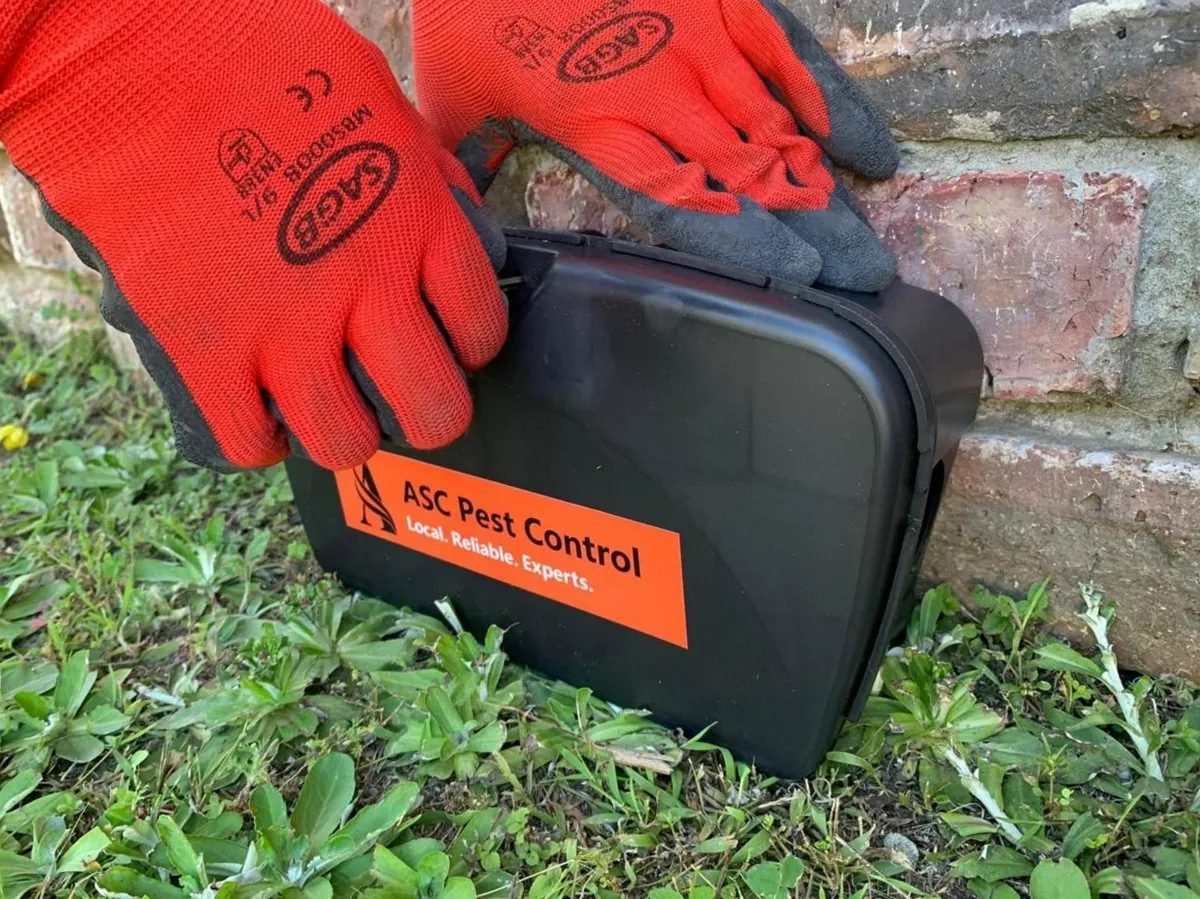
The main entry route for pests riding in on pallets and vehicles. We proof roller doors and levellers, brush-seal gaps, and ring the receiving perimeter with numbered, tamper resistant stations to intercept rodents as they arrive.
Backrooms & stockrooms
Racking, voids and long-dwell stock give cockroaches and stored product insects a home. We monitor with pheromone and sticky traps, drive spillage control and rotation, and treat only where activity shows.
Waste & cardboard bays
Organic waste and stacked cardboard are a magnet for flies and rodents. We manage the interface with insect light traps, bin discipline advice and external stations, so the waste yard does not feed the store.
Know The Signs
Five signs your store's back of house is failing.
Retail pest risk usually shows up first in the stockroom, not on the shop floor: droppings or gnawed packaging in receiving and storage, flies concentrated around the waste and cardboard bay, damaged stock written off with no clear cause, staff reporting sightings that never get logged anywhere, and no numbered device map or recent service record on file. By the time a customer sees something on the sales floor, the back of house has usually been compromised for weeks.
Droppings or gnawed packaging
Found in receiving, stockroom racking or dry store, these are direct evidence of rodent activity between deliveries and the sales floor.
Flies around waste and cardboard
Persistent fly activity at the waste and cardboard bay means the interface between the yard and the store is not being managed, and it is only a matter of time before that pressure moves indoors.
Unexplained stock write-offs
Damaged or contaminated stock written off with no clear cause is frequently a pest problem nobody has traced to source yet.
Sightings that go unrecorded
If staff mention a sighting informally but nothing gets logged or actioned, there is no way to see whether the pressure is rising until it is a visible infestation.
No device map on file
A store that cannot produce a numbered device map and recent service history has no way to prove control to a technical auditor, franchisor or environmental health practitioner.
Recognise your store in two or more of these? Call 041 004 0037 or request a site assessment before it reaches the sales floor or a customer complaint.
SANS 10049 & R638
Built to the retail food safety standards inspectors and retailers apply.
Retail food handling in South Africa is governed by Regulation R638 of 2018 and the SANS 10049 code of practice for food safety in retail and wholesale. Together they require your premises to be kept free of pests and their harbourage, with entry points controlled and a documented programme run by competent operators. Larger retailers and franchisors layer their own technical audits on top. Because ASC is owned by food safety specialists, we build your retail pest programme around the exact evidence a SANS 10049 assessment, an environmental health inspection or a group audit will look for: a site risk assessment, a numbered device map, catch trending by zone, an approved chemical register under Act 36 of 1947, and closed-out corrective actions.
Inspection-ready evidence
A complete, current pest file ready for an environmental health practitioner, a retailer technical audit or a franchisor visit, on demand.
Registered, legal control
Only products registered under Act 36 of 1947, applied by registered operators, recorded to the gram. No shortcuts, no risk to your customers.
A Public Health Warning
Illegal street pesticides have killed. Never let them near food.
When a pest problem appears, the cheapest option on the street corner is often the deadliest. Illegal street pesticides, frequently decanted agricultural chemicals or unregistered products sold loose in unmarked bottles, are extremely toxic, carry no label and no safety data, and are not registered under Act 36 of 1947. Used in and around food areas they have caused serious poisonings and deaths in South African communities, particularly among children. For a food retailer they are also an outright criminal contravention and an automatic food safety failure. As public health specialists we cannot say this plainly enough: the correct response to a pest is a registered operator applying a registered product, never a loose chemical bought on the pavement.
Read: the danger of toxic street chemicals in spaza shops and food areas →
Why A Public Health Specialist
We audit food premises for a living, and we treat your customers as ours.
ASC Pest Control is South Africa's only food safety specialist owned pest control company. That perspective is exactly what a food retailer needs. We understand pests as a contamination and public health hazard, we know how an inspector and a retailer auditor read a pest file, and we bring genuine chemical stewardship to a space full of open and packaged food. Prevention and proofing come first, harbourage removal next, and any product we apply is the least-toxic effective option, targeted precisely, applied by a registered operator and recorded fully. Our diligence protects the shopper who trusts your shelf.
Prevention first
Exclusion, proofing and hygiene advice before any chemical, so the safest treatment is the one you never need on the sales floor.
Targeted application
Gels, monitored baits and crack-and-crevice work in place of open spraying around stock and shelving.
Care for people and product
Every product registered and documented, chosen and placed to protect your customers, your staff and your stock.
My ASC Pest Hub
One portal for the whole store, and the whole group.
My ASC Pest Hub at hub.ascpestcontrol.co.za captures every service digitally the moment our operator finishes, so your store manager and your head office see the same live picture. For a chain, it means one consistent, comparable standard across every branch. Most retailers run this as contract pest control: an annual agreement per store or across the group, with scheduled visits, priority callouts and audit-ready records.
Live trend graphs
Catch counts plotted by zone, so a rising problem in receiving is flagged and treated before it ever reaches the aisles.
One-click audit packs
When a retailer technical team, franchisor or environmental health practitioner audits you, produce a complete current pest file in seconds.
Digital service capture
Every dock, backroom and waste bay logged and time-stamped on site, giving head office one view across the estate.
How Our Team Is Trained
Trained in the food safety standards behind the shelf.
From an independent spaza to a national supermarket chain, our team brings the same food safety discipline we apply in certified factories.
Go Deeper
Related reading and services
Commercial Pest Control
The full ASC commercial hub: every sector and every pest service in one place.
Back to hub →Food & Beverage Pest Control
For in-store bakeries, butcheries and the suppliers behind your shelves.
Explore →Toxic Street Chemicals
Why illegal street pesticides in spaza shops and food areas are a public health emergency.
Read →Rodent Control
Tamper resistant stations, exclusion and monitoring for receiving and backrooms.
Explore →Cockroach Control
Gel baiting and monitoring for stockrooms and food handling areas.
Explore →Fly Control
Insect light traps and waste-bay control for retail food areas.
Explore →Related industries: Food & Beverage · Warehousing & Logistics · Hospitality & Restaurants
Questions
Retail and supermarket pest control FAQ
What does SANS 10049 require of a supermarket for pest control?
SANS 10049, the South African code of practice for food safety in retail and wholesale, expects food-handling retail premises to exclude and control pests as part of good hygiene practice, in line with Regulation R638 of 2018. That means keeping the premises free of pests and their harbourage, controlling entry points, and having a documented programme delivered by competent operators. ASC builds retail programmes around exactly these requirements.
Where do pests actually get into a supermarket?
Almost always through the back of house. Receiving docks, roller doors, waste and cardboard bays, and stockroom voids are where rodents, cockroaches and flies enter and harbour, then move onto the sales floor at night. ASC concentrates control at the back door, proofing entry points, ringing the perimeter with tamper resistant stations, and monitoring the stockroom, so the sales floor stays clean.
Why are illegal street pesticides so dangerous in a food shop?
Illegal street pesticides, often decanted agricultural or unregistered chemicals sold loose, are highly toxic, unlabelled and not registered under Act 36 of 1947. Used near food they have caused serious poisonings and deaths in South Africa. They are also a criminal contravention and an automatic food safety failure. A registered pest control operator using only registered products is the safe, legal alternative that protects your customers and your licence.
Can you cover a supermarket chain to one standard?
Yes. My ASC Pest Hub gives retail groups one consistent digital standard across every branch, with comparable trend data and one-click audit packs per store, so head office and technical teams can manage the whole estate from one view.
How much does supermarket pest control cost?
Cost depends on the store footprint, the size of the backroom and receiving area, and the service frequency the risk level requires. A small spaza or convenience store is priced differently from a full-format supermarket with a large stockroom and loading dock. We quote after a site assessment, because the back-of-house layout drives most of the cost.
Do spaza shops and small retail food outlets need the same pest control as a supermarket?
The principle is identical even though the scale is smaller: Regulation R638 of 2018 applies to any premises handling food, regardless of size. A spaza shop needs registered products applied by a registered operator just as much as a large chain does, which matters given the documented cases of illegal street pesticides causing harm in exactly this kind of small food retail setting.
Can pest control run without disrupting trading hours?
Yes. Most retail pest control, including bait station servicing, monitoring and gel baiting, is designed to run during normal trading with no disruption to customers. Any work needing the store closed, such as fumigation for a severe stored product insect infestation, is scheduled outside trading hours wherever possible.
Next Step
Protect your shelves, your shoppers and your licence.
Book a no-obligation site assessment. A registered specialist will walk your premises and design a programme around your risk.