| Contract element | R638 baseline | HACCP | FSSC 22000 / BRCGS |
|---|---|---|---|
| Typical service frequency | Monthly | Monthly, fortnightly in high-risk zones | Weekly to fortnightly by risk zone |
| Monitoring grid | Numbered external and internal bait stations | Full mapped grid plus insect light traps | Dense mapped grid, ILTs, pheromone and stored product insect monitors |
| Trend analysis | Basic activity log | Trend graphs by zone | Trend graphs by device, zone and species with documented thresholds and root cause analysis |
| Documentation | Service reports and chemical register | Audit pack plus corrective action log | Full audit pack, annual programme review, biologist-level reporting on request |
| Corrective action SLA | Standard response | Defined response windows | Priority SLAs with verification and close-out evidence |
| Best suited to | General food premises meeting Regulation R638 of 2018 | Processors and packhouses with HACCP systems | Certified manufacturers audited by GFSI schemes and retailer programmes |
Contracts / Tenders / Service Level Agreements
Contract pest control for certified manufacturers in Gauteng and the Eastern Cape.
ASC contract pest control is a fixed-term, audit-ready pest management agreement for South African food and beverage manufacturers. It combines scheduled Integrated Pest Management visits, a mapped monitoring grid, trend analysis and one-click audit packs under a single service level agreement, delivered across Gauteng and the Eastern Cape by food safety specialists.
What You Are Buying
What an ASC pest control contract includes.
A pest control contract is not a promise to spray on a schedule. It is a documented system that a certification auditor, a retailer technologist or an environmental health practitioner can pick up and verify in minutes. Every ASC contract, whether it is an annual contract for a single plant or a group maintenance contract across provinces, is built from the same seven components.
Scheduled service frequency by risk
Visit frequency is set per area, not per building. High-risk zones such as raw material intake, open product and waste yards are serviced weekly or fortnightly; low-risk offices monthly. The schedule is written into the contract, so an auditor can check delivery against commitment.
Mapped monitoring grid
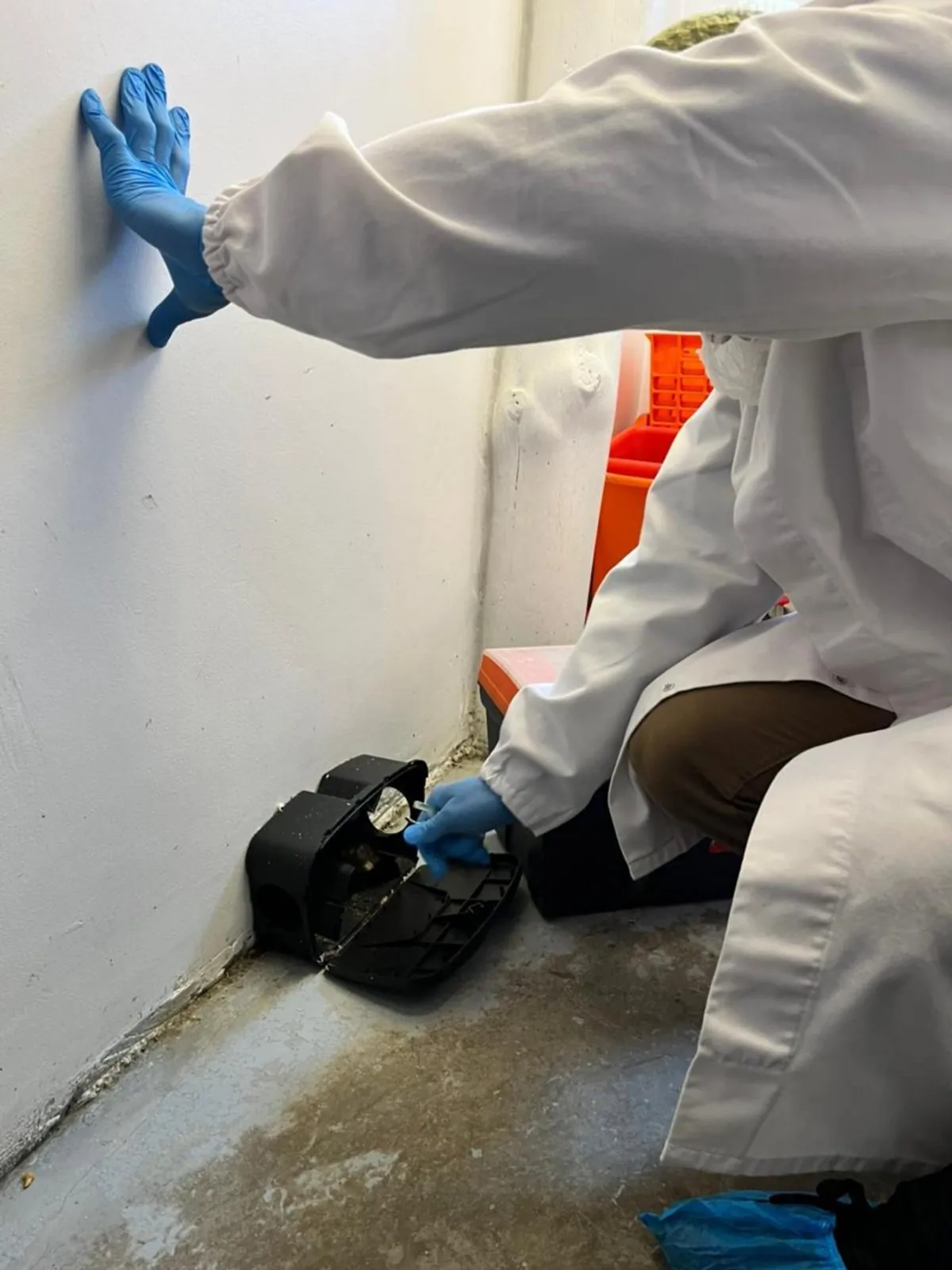
Every bait station, insect light trap, pheromone trap and rodent monitor is numbered, barcoded and plotted on a site map. Nothing is "somewhere behind the racking". The grid is the backbone of your evidence trail.
Trend analysis
Catch and activity data is graphed by device, zone and species over time. A rising trend triggers investigation long before it becomes an infestation, and the graphs themselves are the proof of due diligence auditors want.
Corrective action SLAs
Your service level agreement defines response times: how fast we respond to activity findings, proofing defects and emergency callouts, and how each corrective action is closed out and verified in writing.
One-click audit packs
Every service is captured digitally in myASConline. When an auditor arrives, you generate a complete pack, including the device map, chemical register, safety data sheets, service reports and trend graphs, in seconds.
Emergency callout terms
Contracted clients get defined emergency callout terms, with guaranteed response windows and pre-agreed rates, so a sighting on a Friday afternoon never turns into a weekend of exposure.
Documentation ownership
Your records belong to you. The contract states plainly that maps, trend data and service history are yours, and that they are handed over in full if you ever leave. No provider should hold your compliance file hostage.
Contract Structures
Choose the pest control contract structure that fits your operation.
Contract pest control is not one product. A single bakery under Regulation R638 and a three-province group running FSSC 22000 need very different agreements. We structure contracts three ways, and price them either as a fixed monthly retainer or per service.
Annual single-site contract
One facility, one annual contract, one fixed monthly retainer. The most common structure for a standalone factory, packhouse or distribution centre that needs a dependable, audit-ready programme.
Multi-site contract
Several facilities under one agreement, one account manager and one portal. Consistent station numbering, reporting and SLAs across every site, in Gauteng, the Eastern Cape or both.
Group contract
For holding companies and franchise groups: a master service level agreement at group level with site schedules underneath, consolidated invoicing and group-wide trend visibility for the quality team.
Monthly retainer or per-service? Most certified facilities choose a retainer-based maintenance contract: a fixed monthly fee covering scheduled visits, monitoring hardware, reporting and the portal, which makes budgeting simple and removes any incentive to skip visits. Per-service pricing suits low-risk sites that only need quarterly inspections, but it rarely satisfies a GFSI auditor at a food facility.
By Audit Standard
What changes at each audit standard tier.
The audit standard you are certified against, or working towards, determines the intensity of your contract: how often we visit, how dense the monitoring grid is, and how much analysis sits behind the reports. This is how a typical contract scales.
Onboarding
From signature to audit-ready, without a compliance gap.
Switching providers mid-certification cycle worries every quality manager, and it should. A pest control contract handover done badly leaves a hole in your records exactly where an auditor will look. Our onboarding is designed so that the file never breaks.
1. Site survey
A registered specialist walks the entire site, inside and out: intake, production, storage, waste, drains, roof voids and the perimeter. We identify pressure points, entry routes and harbourage before we design anything.
2. Risk assessment
Each area is risk-rated against your processes and your audit standard. The risk assessment drives service frequency, station density and monitoring types, and it is documented in your file from day one.
3. Station mapping
We install or adopt the monitoring grid and map every numbered station in myASConline. Where an outgoing provider's hardware is serviceable, we can retain and renumber it to cut changeover cost.
4. Baseline trending and records handover
We audit the outgoing provider's records, import historical data where it exists, and establish a documented baseline in the first service cycle. Your trend history continues, and the transition itself is recorded, so the auditor sees an unbroken programme, not a gap between contractors.
Tenders, RFQs & Vendor Questionnaires
Putting your pest control contract out to tender? We speak procurement.
Many manufacturers are required to tender their pest control contract every one to three years. ASC completes pest control tender specifications, RFQ responses and vendor questionnaires in full, in the format your procurement team issues them, with every registration certificate, insurance schedule and method statement attached. You get a compliant, comparable bid, not a brochure.
If you are the buyer writing the tender, start with our free pest control tender specification template. It sets out the minimum requirements a certified facility should demand of any bidder: operator registrations, service frequencies, monitoring and trend reporting, corrective action SLAs, emergency terms and documentation ownership on exit. A tight specification protects you from comparing a documented IPM programme against a cheap spraying round as if they were the same service.
For a full walkthrough of what to specify and how to score bids, read our guide to pest control tender and RFQ specifications.
What we submit with every tender
- Registered PCO certificates (Act 36 of 1947)
- SAPCA membership ASC797 and Structural Pest Control P43510
- Site-specific method statement and service schedule
- Draft service level agreement with SLAs and callout terms
- Insurance, safety file and chemical register
- myASConline portal demonstration for your quality team
Who It Is For
Built for food and beverage manufacturers in two provinces.
Contract pest control is for any operation whose certification, customers or regulator expect a continuous, documented programme: food and beverage manufacturers, processors, packhouses, distribution centres and any certified company that gets audited. We serve them from two bases, with the same standard in both.
Eastern Cape
Gqeberha (Port Elizabeth), the Coega SEZ, Kariega and East London including the ELIDZ. Automotive-belt food suppliers, citrus packhouses and FMCG plants serviced from our South End, Gqeberha office.
Pest control Eastern Cape →Gauteng
Johannesburg, Ekurhuleni's East Rand factory belt, Pretoria, Midrand and the Vaal Triangle. High-density manufacturing and distribution serviced from our Randburg office.
Pest control Gauteng →Food & beverage facilities
Manufacturers, beverage plants and packhouses audited against R638, HACCP, FSSC 22000, BRCGS and GLOBALG.A.P. The core of our contract book.
Food & beverage pest control →Manufacturing & distribution
General manufacturing, DCs and 3PL warehousing that need mapped monitoring and documented control, with or without food on site. See also our broader commercial pest control programmes and pest control in East London.
Manufacturing pest control →Credentials You Can Verify
Registered, accredited and accountable.
Why Ownership Matters
Food safety specialist ownership changes your audit outcome.
Most pest control companies are owned by pest control people, and it shows in their paperwork. ASC is owned by food safety specialists whose parent group audits factories, packhouses and kitchens against the world's toughest standards. When we design a contract pest control programme, we design it the way it will be read: clause by clause, non-conformance by non-conformance.
That is why our trend graphs come with thresholds and root cause notes, why our corrective actions are closed with verification evidence, and why our audit packs are structured to answer an FSSC 22000 or BRCGS checklist in order. An auditor who opens an ASC file finds what they expect, where they expect it, and moves on. Fewer findings, shorter audits, calmer certification cycles.
Read more on how buyers in Gauteng approach this decision: pest control contracts for Gauteng food manufacturers, pest control contract pricing in Gauteng and choosing a pest control contractor for certified facilities.
How Our Team Is Trained
Trained in the standards your contract must satisfy.
Every pest control contract we run is delivered by a team trained across food safety, quality and pest control disciplines, so the people servicing your site understand the audit you are preparing for.
Questions
Contract pest control FAQ
What does a pest control contract cost?
Pest control contract pricing depends on your site size, risk category, audit standard and service frequency, so we price from a site survey rather than a rate card. A small R638 facility on a monthly maintenance contract costs far less than a multi-line FSSC 22000 plant with weekly monitoring. Most clients pay a fixed monthly retainer that covers scheduled visits, monitoring hardware, reporting and the myASConline portal, so there are no surprise invoices at audit time. Request a site survey and we will quote a fixed annual contract price within days.
Can ASC take over an existing contract mid-certification cycle?
Yes. Taking over a pest control contract mid-certification cycle is one of the most common ways clients join us. We run a structured handover: we survey the site, audit the outgoing provider's records, keep or remap the existing station numbering, and import historical trend data into myASConline so your baseline is preserved. Your compliance file stays continuous, which means an auditor sees an unbroken record rather than a gap between providers. Existing bait stations and insect light traps can often be retained to reduce changeover cost.
What should a pest control tender specification include?
A good pest control tender specification should define the audit standard the programme must satisfy, minimum service frequencies by risk area, monitoring station types and mapping requirements, trend reporting and corrective action SLAs, operator registrations under Act 36 of 1947, SAPCA membership, insurance, emergency callout terms and documentation ownership on exit. ASC publishes a free pest control tender specification template that procurement teams can adapt, and we complete tender, RFQ and vendor questionnaire responses for buyers who want a compliant comparison.
Do you offer multi-site contracts across provinces?
Yes. We run multi-site and group pest control contracts across Gauteng and the Eastern Cape from our Randburg and Gqeberha offices, covering Johannesburg, Ekurhuleni, Pretoria, Midrand, the Vaal Triangle, Coega, Kariega and East London. Every site is serviced to the same documented standard, monitored in the same myASConline portal, and reported through a single account manager, so a group quality manager sees every facility's trend data and audit pack in one place.
Next Step
Get a contract pest control quote.
Book a no-obligation site survey. A registered specialist will walk your facility, risk-rate every area and quote a fixed annual contract, ready for your procurement or quality team.