
Pest-Type Service / Flies
Fly control that removes the source, not just the flies you can see.
Flies land on waste and then on food, carrying whatever they picked up along the way. In a kitchen or a food facility that is a direct contamination route. ASC controls flies with insect light traps, drain hygiene and exclusion working together, then trends the catch so you can prove control is holding.
Why It Matters
Flies are the ultimate contamination courier.
Several fly groups pressure South African premises. The house fly (Musca domestica) feeds on waste and faeces, then on your food, regurgitating and defecating as it goes. Fruit flies (Drosophila spp.) and other small flies breed in fermenting spillage and the organic film inside drains. Blowflies, the large metallic flies, are drawn to meat, offal and decay and signal a nearby source. A fly moves from filth to food in seconds, which makes it a public-health hazard first and a nuisance second.
Direct contamination
House flies carry Salmonella, E. coli and other pathogens from waste to food-contact surfaces, transferring them the instant they land.
Hidden breeding
Fruit flies and drain flies breed in the organic film inside drains and sumps. Kill the adults and the source keeps producing more.
Legal exposure
Regulation R638 of 2018 requires food premises to be free of pests. Any insecticide used must be registered under Act 36 of 1947 and applied by a registered operator.
Audit & brand risk
Flies over open product, or a rising insect light trap catch count, are among the most common findings that cost premises their score and their customers' trust.
Know The Signs
What your flies are actually telling you.
Flies clustering around one specific spot rather than spread evenly, small flies persisting near a drain even after cleaning, fruit flies appearing around bins or recycling, maggots in waste corners or bin lids, and a rising catch count on an insect light trap are all signs pointing to an active breeding source, not just flies wandering in from outside. Which fly you are seeing narrows the source considerably.
Flies concentrated in one area
Flies clustering repeatedly around one bin, drain or corner rather than spread through the building usually means that spot is the breeding source.
Small flies near drains
Tiny flies persisting around a floor drain even after it looks clean point to the organic film inside the drain itself, which cleaning alone rarely removes.
Fruit flies around bins
Fruit flies clustering near waste, recycling or fermenting produce are breeding in that spillage or residue, not just passing through.
Maggots
Maggots in a bin, bin lid or waste corner confirm active breeding on site, not flies arriving from elsewhere.
Rising trap catch counts
An insect light trap catch count that climbs visit over visit is an early warning that a breeding source has flared up somewhere in the building.
Flies despite visible cleanliness
Persistent flies in a space that looks clean usually means the source is hidden: inside a drain, under equipment, or in a void rather than on a visible surface.
Still seeing flies after cleaning? Call 041 004 0037 or request an assessment and we will trace the breeding source cleaning alone cannot reach.
The ASC Fly Method
Exclude, remove the source, then trap what is left.
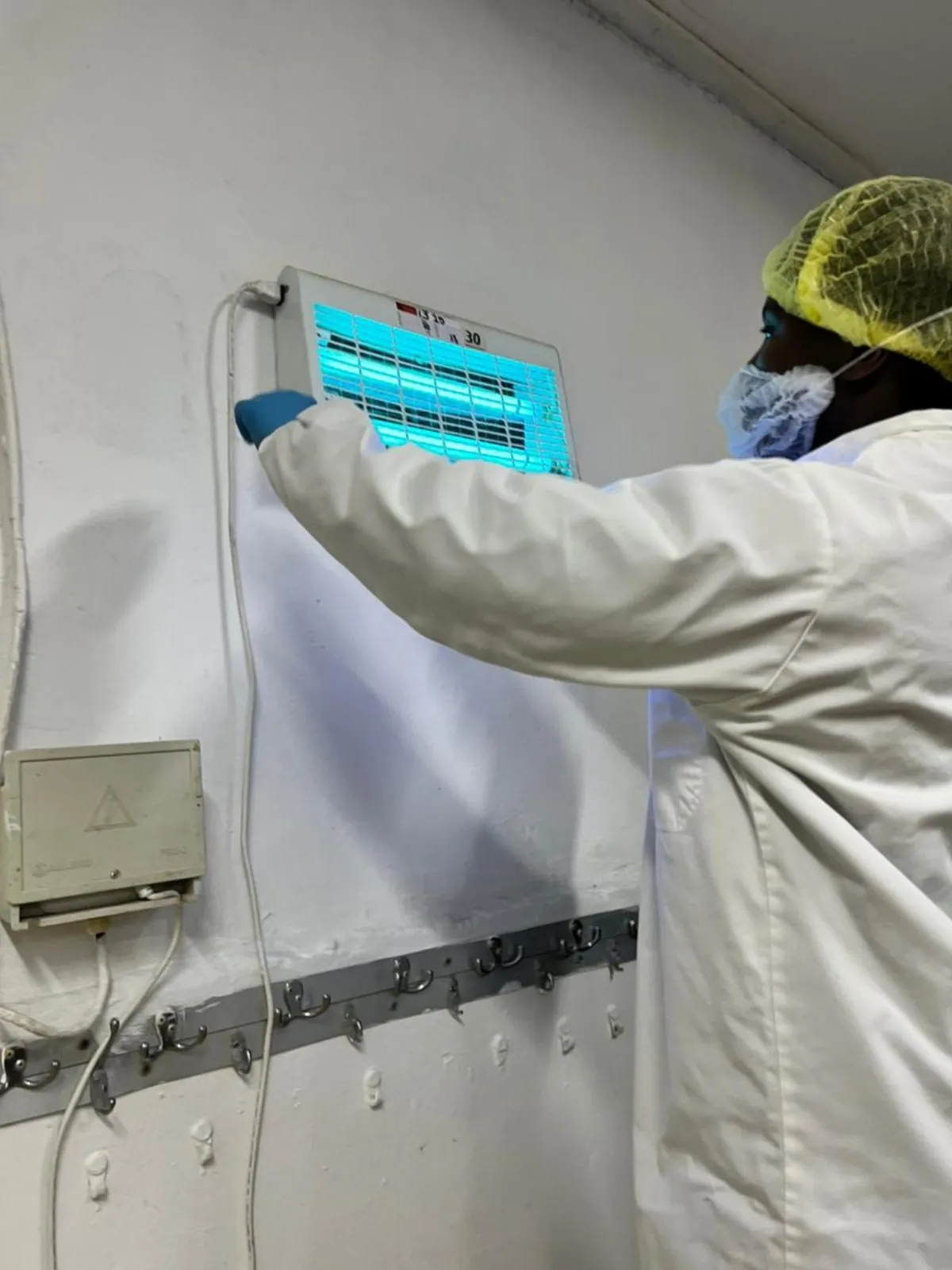
Insect light traps alone never solve a fly problem. They catch the adults inside while flies keep entering and breeding. Real control layers three things: exclusion to keep flies out, source removal through drain hygiene and waste management, and correctly placed insect light traps (ILT, also called electric fly killers or EFK) to intercept and monitor what still gets in.
- ✓ Exclusion: door seals, air curtains, fly screens and self-closing doors to keep flies outside.
- ✓ Drain & waste hygiene: biological drain treatment and cleaning schedules that remove the breeding film.
- ✓ Insect light traps: mapped, numbered and correctly sited, never over open food, with tubes replaced on schedule.
- ✓ Catch trending: counts recorded and trended by unit so a rising line points straight at a flaring source.
Catch Trending
The catch tray is a data source, not just a bin.
Every insect light trap is inspected and its catch identified and counted at each service. Recorded over time, that catch becomes a trend line. A spike in one unit tells us a door is being propped, a drain has flared or a delivery brought flies in, so the next visit targets the source instead of guessing. All of it is captured live in My ASC Pest Hub, with live trend graphs by unit and a one-click audit pack ready whenever your inspector or certification body asks for it.
Identify
Catch is identified to fly group, because house flies, small flies and blowflies each point to a different source.
Trend
Counts are trended by unit and zone, turning the trap into an early-warning system rather than a passive killer.
Act
A rising line triggers a source investigation and a corrective action, closed out with evidence, not a shrug.
Prove
The whole record generates a one-click audit pack from My ASC Pest Hub, exactly as an auditor reads it.
Why A Food Safety Specialist Should Handle Your Flies
We audit facilities for a living, so we control pests the way an auditor reads it.
ASC Pest Control is South Africa's only pest control company owned by accredited food safety specialists. Anyone can hang an insect light trap on a wall. Placing it correctly, reading the catch, chasing the source and documenting the trend is the diligent, professional work that actually keeps flies off your product. We care about the impact of chemicals on people, product and the environment, so we lead with exclusion, hygiene and physical trapping, and use registered products only where they are genuinely needed and never over food.
Our team is trained in
Where This Applies
Fly control for every set of premises.
Commercial premises
Kitchens, restaurants, hotels, retail and waste areas. Mapped insect light traps and drain programmes, documented for audit. →
Food & beverage facilities
HACCP designed fly programmes aligned to BRCGS, FSSC 22000, SANS 10049 and R638. →
Homes & estates
Family-safe fly control focused on exclusion and source removal rather than sprays around the kitchen. →
Species identification guide
Tell house flies, fruit flies, drain flies and blowflies apart, and read what each one means, in our species guide. →
Keep reading: Insect light trap placement · Why trend analysis matters · The real cost of pests
Where we do this
Fly control across Gqeberha and Johannesburg
In Port Elizabeth (Gqeberha) a coastal climate and harbour-adjacent waste keep fly pressure high for most of the year. In Johannesburg it peaks through the summer rainfall season and around waste handling in the industrial corridors. In both, the catch count on an insect light trap is a sanitation readout — we trace it to the breeding source rather than simply killing the adults.
Nelson Mandela Bay: South End, Newton Park, Walmer, Summerstrand, Humewood, North End, Korsten, Deal Party, Struandale, Perseverance, Markman, Coega IDZ, Kariega (Uitenhage), Despatch.
Greater Johannesburg: Sandton, Randburg, Rosebank, Midrand, Fourways, Roodepoort, Soweto, Edenvale, Bedfordview, Germiston, Alberton, Boksburg, Benoni, Kempton Park, plus City Deep, Isando, Longmeadow, Linbro Park, Wadeville and Alrode.
Pest control in Port Elizabeth (Gqeberha) · Pest control in Johannesburg · East London · Eastern Cape · Gauteng
Questions
Fly control FAQ
Do insect light traps alone solve a fly problem?
No. An insect light trap catches the flies already inside but does nothing about where they come from. Lasting control needs exclusion to stop flies entering, source removal through drain hygiene and waste management to stop them breeding, and insect light traps positioned to catch what still gets in. Traps are the monitoring and knockdown layer, and their catch counts tell you when a source has flared up.
Why does drain hygiene matter for fly control?
Small flies such as fruit flies and drain flies breed in the organic film inside drains, sumps and floor gullies. You can catch and kill the adults endlessly, but the population replaces itself until that breeding film is removed. Effective fly control treats the drains and moist organic matter as the real source, combining biological drain treatment and cleaning schedules with trapping.
Where should insect light traps be placed in a food facility?
They should intercept flies as they enter, not be visible from outside so they do not draw flies in, sit out of direct and competing light, and never hang directly over open product, preparation surfaces or packaging. Typical positions are near entrances, dispatch and receiving bays and inside kitchens, mounted at the correct height. Placement is mapped and numbered, and tubes are replaced on schedule.
How often should insect light trap tubes be replaced?
The ultraviolet output that attracts flies fades long before the tube stops glowing, so tubes are replaced on a scheduled basis, typically annually and ideally before the peak fly season, to keep each unit working at full effectiveness. We record every tube change as part of the documented programme.
How much does fly control cost?
Cost depends on the number of insect light traps needed, the size of the premises, whether drain treatment is required and the service frequency. A single domestic callout is priced differently from a commercial contract with mapped EFK units and monthly catch trending. We quote after a short site assessment rather than over the phone.
How do I get rid of fruit flies in my kitchen at home?
Fruit flies almost always breed in something already in the kitchen: overripe fruit, a recycling bin, a drain, or a damp cloth. Removing the breeding material and cleaning drains with a proper biological drain treatment, not just surface cleaning, usually resolves a home infestation within days. If fruit flies persist after cleaning, the breeding source is likely inside the drain itself and needs targeted treatment.
Why do I still have flies after cleaning?
Surface cleaning removes what you can see, but small flies breed in organic film inside drains, gullies and sumps that a normal wipe-down never reaches. If flies persist after cleaning, the source is almost always hidden rather than absent, which is why professional fly control treats drains directly rather than relying on visible hygiene alone.
What is the difference between fruit flies and drain flies?
Fruit flies (Drosophila species) are small with red eyes and are drawn to fermenting fruit, spillage and sugary residue. Drain flies (moth flies) are fuzzy, moth-like and breed specifically in the organic film inside drains and sumps. Both point to a moist organic breeding source, but the exact treatment differs by species, which is why correct identification matters before choosing a fix.
Next Step
Cut off the flies at the source.
Book a no-obligation site assessment. A registered specialist will walk your premises, map the insect light traps, find the breeding sources and design a layered fly programme around your risk.