A hotel in Sandton or Pretoria needs a pest control contract that covers two different places under one roof. The kitchen and banqueting areas are food premises under Regulation R638 of 2018, with pests to control and records that show the control is working. The bedroom floors carry a different risk, bed bugs brought in by guests, and need a housekeeping routine and an operator who can inspect and treat a room discreetly.
ASC Pest Control, a SAPCA member (ASC797), offers contract pest control to hotels, conference venues and serviced apartments from its Gauteng office at 272 Oak Avenue, Ferndale, Randburg. Every contract starts with a no-obligation site assessment. Request a site assessment or call 010 500 4661. See contract pest control.
Key points
- A hotel kitchen is a food premises. R638 requires it to be pest proof, and the person in charge must take effective measures to prevent or eliminate pests.
- Bed bugs arrive in luggage and are not a sign of a dirty room. Early detection by housekeeping gives the best chance of keeping it to one room.
- The kitchen and the room block need separate plans in the same contract, with one set of records for the general manager.
Why a hotel is two pest problems
Business hotels around Sandton Central and Rosebank run full kitchens from breakfast to late room service, plus banqueting for conferences. Pretoria has the same pattern in Hatfield and Menlyn, and Centurion in its conference venues. Food arrives at a loading bay most days, often through a shared basement or service road, and waste leaves the same way. That traffic is how German cockroaches ride in on boxes and how rats and mice reach the back of house.
Upstairs, every guest brings luggage that has slept somewhere else, and the year-end conference and festive season fills both the kitchen and the rooms at once. One conference group can bring bed bugs onto a floor in a single night. The two need different checks and treatments, yet hotels often buy pest control as one line item, and that is where gaps appear.
The kitchen, banqueting and room service
The German cockroach (Blattella germanica) is the pest that most often defeats a hotel kitchen. The University of Florida's entomology publication on the species records that a typical egg case holds 30 to 40 eggs, that the whole life cycle takes about 100 days, and that breeding is continuous with many overlapping generations present at once. The same source reports that active field populations are about 80 percent nymphs, many hidden in harbourage, so treating only the adults you can see leaves most of the population behind.
In a hotel, look in the warm, damp voids under dishwashers and in the motor housings of fridges and ice machines. Banqueting hot boxes and the room service pantry on each floor are next.
Rodents take a different route. Basement parking, refuse rooms and loading docks are where rats and mice enter, and service ducts let them move between floors. Flies breed in the refuse room, and small flies point to drains and drip trays that cleaning is missing. See cockroach control and fly control for how each is managed.
The bedroom floors and bed bugs
The University of California's pest management programme describes adult bed bugs as about 5 mm long, flat and rusty red, able to survive many months without a meal. It lists hotels among the places most at risk because the insects travel on luggage and clothes, and notes that they are not known to spread disease. For a hotel the harm is commercial: one guest photograph of bites, posted with the hotel's name, can sit at the top of its reviews for months.
The hotel risk sits in the routes through the building. A conference block booking puts dozens of bags on one floor in an afternoon, luggage waits in a shared store, and soiled linen travels down service lifts to the laundry. Bag linen from a reported room before it leaves, keep the room off sale with the bed as found, and have the operator inspect the adjoining rooms too. Never let staff spray a room with a shop-bought product, which the same source says is not effective.
Our guide to bed bugs in hotels and guesthouses covers the signs and the first hour. Our bed bug control page explains how ASC finds and treats them, including heat treatment.
Running a hotel in Sandton, Rosebank, Pretoria or Centurion? We walk the kitchen, the back of house and a sample of rooms with your managers and give you a written proposal. Request a no-obligation site assessment or call 010 500 4661. Or score your current file with the free audit readiness self-assessment.
What R638 requires of a hotel kitchen
Every hotel kitchen in South Africa works under Regulation R638 of 22 June 2018, made under the Foodstuffs, Cosmetics and Disinfectants Act 54 of 1972. In Johannesburg and Tshwane the inspector is the municipal environmental health practitioner. The table puts the pest related duties in our own words.
| Regulation | What it requires | In a hotel |
|---|---|---|
| 5(3)(c)(ii) | Food premises must be pest proof in accordance with the best available method. | Door seals at the loading bay, sealed pipe and cable penetrations, screened openings in the kitchen and stores |
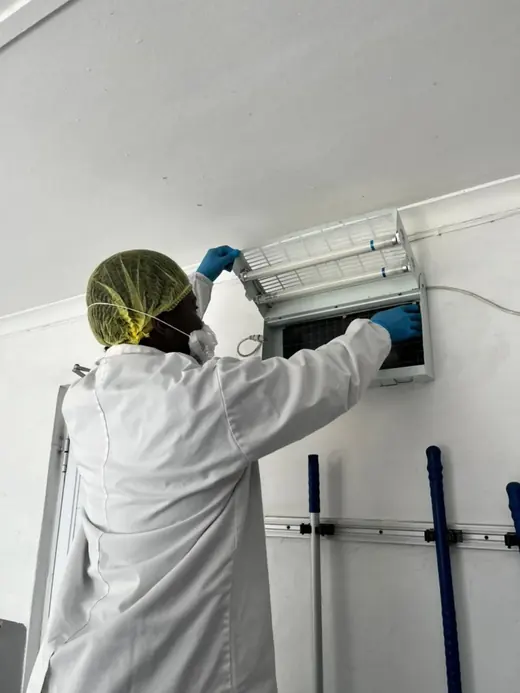
| 5(3)(c)(iii) | Food premises must have effective means of controlling and preventing the access of flies, cockroaches and other insects. | Fly screens, closing doors, fly control units placed away from open food |
| 10(3) | The person in charge must ensure effective measures are taken to prevent or eliminate flies, other insects, rodents, birds, vermin and other pests on the premises. | A documented programme covering kitchen, stores, banqueting, room service pantries and refuse room |
| 10(4) | Refuse must be removed as often as necessary, and whenever an inspector requires it. | A refuse room that is emptied and washed on a schedule |
| 10(16) | Compliance can be shown through the keeping of appropriate records. | Service reports, device map, sightings log and corrective actions in one file |
R638 does not name a contractor or a number of visits. It asks for results and for records that show them. Hotel groups usually add their own audits. These are group and auditor expectations, not R638 requirements, and they often ask for a device map and proof that the operator is registered under Act 36 of 1947, with catches identified to species or pest group. Our article on R638 pest control requirements goes through the regulation in more depth.
Who does what between visits
Your staff are in the building every hour of the day. Give each check to a named person.
| Check | How often | Who |
|---|---|---|
| Record every sighting or guest complaint with date, time and room or area | When it happens | Any staff member, checked by the duty manager |
| Look along mattress seams, the headboard and the bed frame when changing linen | At each full room turn | Housekeeping |
| Clean under and behind kitchen equipment and banqueting trolleys | Weekly | Kitchen |
| Scrub floor drains and empty drip trays at bars and coffee stations | Daily or weekly, as the area needs | Kitchen and food and beverage |
| Wash the refuse room and keep loading bay doors closed when not in use | Daily | Stewarding and receiving |
| Check deliveries for cockroaches and gnawed packaging before they go to stores | Every delivery | Receiving |
| Inspect and service rodent stations, insect monitors and fly units, and identify catches | Every visit | Contractor |
| Inspect rooms reported by housekeeping, and the rooms around them | On call and by schedule | Contractor |
| Report proofing and hygiene faults in writing and follow them up | Every visit | Contractor reports, hotel fixes |
The free pest identifier helps staff put a name to what they saw.
An illustration from a business hotel
This is an illustration of a common pattern, not a client case. A 200-room business hotel near Sandton Central hosts a three-day conference. On the second morning a delegate reports bites, and a staff member sprays the mattress. A week later two more rooms on the floor report bites.
A better response takes the first room off sale, leaves the bed alone and calls the contractor the same day. The registered operator inspects the room and the rooms on either side, above and below, finds the harbourage in the headboard and treats the affected rooms. Follow-up inspections are scheduled and recorded until no further activity is found. Every step goes into the file. If that sounds like a risk in your building, request a site assessment and we start with an inspection of the kitchen and a sample of rooms.
What a hotel pest control contract covers in Gauteng
Our contract programme starts with the no-obligation site assessment: kitchen, stores, banqueting, refuse room, basement, roof and a sample of bedroom floors. Where pigeons nest on ledges and roof plant, bird control can be added. Visits are planned around your service times so guest areas are disturbed as little as possible.
Every device is numbered and shown on a device map. After each visit the report goes onto the myASConline portal, with trend analysis and an audit pack on demand. If you are changing contractor, serviceable devices of your current contractor can be kept and renumbered rather than replaced.
Our technicians are employed by ASC, not subcontracted, and the company is owned by accredited food safety specialists. Johannesburg hotels are served from the Ferndale office. Pretoria and Centurion are served on scheduled routes from Ferndale, and we have no separate branch in Tshwane. See pest control in Johannesburg, pest control in Pretoria and Centurion and pest control for restaurants and hotels.
Frequently asked questions
Is pest control a legal requirement for a hotel in South Africa?
For the hotel kitchen and any area where food is handled, yes. Regulation R638 of 2018 requires food premises to be pest proof and the person in charge to take effective measures to prevent or eliminate pests. The law does not name a contractor, but a contract with a registered operator and written service reports is the usual way to show an inspector that this is being done.
Does a bed bug in a room mean the hotel is dirty?
No. Bed bugs travel in luggage and clothing and feed on blood, so a clean room can still be infested. What matters is finding them early, closing the room and having it inspected and treated by a professional before they spread to neighbouring rooms.
How often should a hotel have pest control visits?
R638 does not fix a number of visits. In our experience many hotel kitchens are serviced monthly, with more frequent visits in high-risk areas or while a problem is being cleared, and bedroom inspections are scheduled separately. We set the frequency for each area after the site assessment. See how often a food facility needs pest control.
Does ASC Pest Control service hotels in Pretoria and Centurion?
Yes. Pretoria and Centurion are served on scheduled routes from our Gauteng office in Ferndale, Randburg. Call 010 500 4661 to arrange a site assessment.
Request a site assessment for your hotel
We walk the building with your general manager or chief engineer at a time that suits your occupancy, tell you plainly what we find, and follow with a written proposal, with no obligation. Request your site assessment or call 010 500 4661.