Pest control for a meat or poultry plant in Gauteng starts with a written programme, and for a registered abattoir the law requires one. If the site is a registered abattoir, the Red Meat Regulations or the Poultry Regulations under the Meat Safety Act 40 of 2000 require the owner to provide a written vermin control programme, with a drawing of the bait stations and a poison register. If it is a meat processing plant or butchery that is not a registered abattoir, it is a food premises under Regulation R638 of 2018 and must be pest proof.
ASC Pest Control, a SAPCA member (ASC797), offers contract pest control to abattoirs, poultry plants and meat processors from its Gauteng office at 272 Oak Avenue, Ferndale, Randburg. Every contract starts with a no-obligation site assessment. Request a site assessment or call 010 500 4661. See contract pest control.
Key points
- An abattoir owner must have a written vermin control programme for each vermin type, for approval by the provincial executive officer.
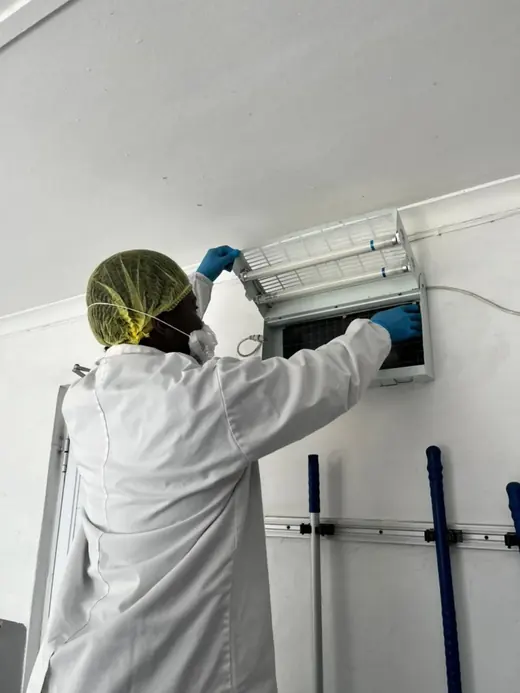
- Flies are the summer pest in a meat plant. Blood, condemned material and wet waste breed them, and fly units catch adults without removing the source, so the waste routine matters more than the fly units.
- The drawings and registers the meat regulations list are among the records a customer or certification auditor will ask to see.
Why meat and poultry plants carry more pest pressure
Few food factories give pests as much to work with. Live animals or birds arrive with manure, litter and feathers. The process produces blood, offal and condemned material every shift, and the floors stay wet from washing down.
Gauteng's summer makes it worse. From November to March the days are hot and the afternoon storms keep waste yards damp, which is when fly numbers climb. In City Deep, Germiston, Krugersdorp or Pretoria West the weak points are usually the same: the lairage or live bird receiving bay, the offal and waste bay, the effluent plant and the dispatch doors.
The pests that matter, and where to look
The house fly (Musca domestica) is the one to plan for. The University of Florida's entomology publication on the species records that a female can lay up to 500 eggs in batches of 75 to 150, and that in warm summer conditions the life cycle can be completed in as little as seven to ten days. It lists Salmonella, Campylobacter and Escherichia among the bacteria house flies carry, moved onto food on the mouthparts and body and in vomit and faeces.
Blowflies, the large metallic flies, are drawn to blood and offal and point to waste that has stood too long. See fly control and our guide to insect light trap placement.
Rats and mice follow feed and waste, and travel by the drains. Look along the perimeter fence, in the feed store and at any drain without a trap or grid. Rodent control in a meat plant depends on proofing and on where the stations are placed. Feral pigeons and sparrows roost over loading bays and live bird receiving, so bird proofing often belongs in the same plan.
Cockroaches settle in warm plant rooms and in the staff canteen (see cockroach control). If you dry meat, add hide and larder beetles (Dermestes species), which turn up in biltong and dried sausage rooms.
Running an abattoir, poultry plant or meat processing plant in Gauteng? We walk the site with your QA or technical manager, from live receiving to dispatch, and give you a written proposal. Request a no-obligation site assessment or call 010 500 4661. ASC is a SAPCA member (ASC797).
What the law requires
Two sets of law cover meat sites. A registered abattoir has its own regulations under the Meat Safety Act 40 of 2000: the Red Meat Regulations, R1072 of 17 September 2004, and the Poultry Regulations, R153 of 24 February 2006. Both tell the owner to provide "a written control programme" for each type of vermin.
| Where | What it requires | On your site |
|---|---|---|
| Regulation 55 (red meat) and regulation 53 (poultry), hygiene management programmes | A written vermin control programme for each vermin type, for approval by the provincial executive officer, with schematic drawings of the bait station positions, a poison register and training for people who work with poisons. Poultry adds routine checking of bait stations. | A numbered device map and a chemical register, with training records and dated service reports |
| Regulation 11 of both sets | Drain inlets must have mechanisms that keep vermin out. Doors and door frames must be vermin proof. Windows used for ventilation must have fly screens. | Drain grids back in place after cleaning, door seals intact, screens whole |
| Sanitation and vermin control regulation in both sets (regulation 41 for poultry) | Chillers and freezers must be free from vermin. | Chiller door seals and panel joints on the inspection route |
A meat plant that is not a registered abattoir, such as a standalone processing plant, a deboning plant or a butchery, is a food premises under Regulation R638 of 22 June 2018, made under the Foodstuffs, Cosmetics and Disinfectants Act 54 of 1972.
R638 requires food premises to be pest proof by the best available method (regulation 5(3)(c)(ii)) and to have effective means of keeping out flies, cockroaches and other insects (regulation 5(3)(c)(iii)). The person in charge must ensure that effective measures are taken to prevent or eliminate flies, other insects, rodents, birds, vermin and other pests on the food premises (regulation 10(3)), and that refuse is removed as often as necessary (regulation 10(4)).
Neither law names a contractor or a number of visits. Certification standards and retail customers go further, as customer and auditor expectations, not law. The pest management section of BRCGS Food Safety Issue 9 and the prerequisite programme standards used under FSSC 22000 expect a documented, risk based programme with records and trend review. FSSC 22000 Version 7, audited from 1 May 2027, uses ISO 22002-100:2025 together with ISO 22002-1:2025 for food manufacturing. See our articles on R638, BRCGS and FSSC 22000 pest control requirements.
Who does what between visits
The contractor is on site only for the service visits. Your team is there every shift, so give each check to a named person.
| Check | How often | Who |
|---|---|---|
| Record every sighting with date, time and area | When it happens | Any staff member, checked by QA |
| Close and empty containers of condemned and inedible material, and wash the waste bay | Every shift | Site, hygiene team |
| Clear manure, feathers and litter from the lairage or live receiving bay | Daily | Site, receiving |
| Check dock door seals, strip curtains and fly screens for damage | Weekly | Site, maintenance |
| Inspect and service rodent stations, fly units and insect monitors, and identify catches | Every visit | Contractor |
| Keep the device map, chemical register and training records current | Every visit and at each change | Contractor, filed by QA |
| Report proofing and hygiene faults in writing and follow them up | Every visit | Contractor reports, site fixes |
| Review the trend report and open recommendations with the contractor | At least quarterly | QA or technical manager |
The free pest identifier helps staff put a name to what they saw.
An illustration from a poultry plant
This is an illustration of a common pattern, not a client case. A poultry further processing plant in Ekurhuleni sees fly counts in its dispatch area rise through November. The site asks for more fly units, and the counts keep rising.
A better response starts outside. The contractor walks the yard and finds the waste skips standing open beside the dispatch doors, with a torn seal on one dock door. The skips are collected twice a week but never washed, so wet residue stays in the bottom from one collection to the next. In warm weather a house fly generation can be complete in seven to ten days, so that residue has time to breed flies, and the open skips draw adult flies to the doors.
The site moves the skips away from the doors and fits lids, has them washed out after each collection, and repairs the seal. Counts are tracked weekly until they are back at the earlier level, and each step goes into the file. If that sounds familiar, request a site assessment and we start with the waste route.
What a meat plant pest control contract covers in Gauteng
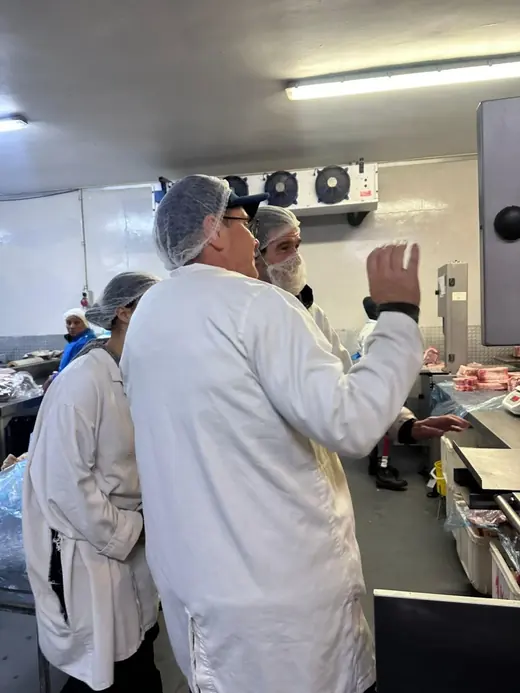
Our contract programme starts with the no-obligation site assessment, which covers the perimeter, live receiving, the waste and effluent areas, production, chillers and stores. From that we write the programme for each pest group, with visits planned around your slaughter and production times.
Every device is numbered and shown on a device map, which serves as the schematic drawing of bait station positions the meat regulations ask for. After each visit the report goes onto the myASConline portal, with trend analysis and an audit pack on demand. If you are changing contractor, serviceable devices already on site can be kept and renumbered. After a positive pathogen result, our disinfection services are available separately.
Our operators are registered under Act 36 of 1947 and our technicians are employed by ASC, not subcontracted. See pest control in Gauteng, Johannesburg, Ekurhuleni and pest control for food and beverage facilities.
Frequently asked questions
Is a pest control programme a legal requirement for an abattoir in South Africa?
Yes. The Red Meat Regulations of 2004 and the Poultry Regulations of 2006, made under the Meat Safety Act 40 of 2000, require the abattoir owner to have a written vermin control programme for each vermin type, for approval by the provincial executive officer. The programme must include drawings of the bait station positions and a poison register, as well as training for the people who work with poisons.
Does R638 apply to a meat processing plant?
A plant that handles food and is not a registered abattoir is a food premises under Regulation R638 of 2018. It must be pest proof, and the person in charge must take effective measures to prevent or eliminate pests. Some sites hold an abattoir registration and also run food premises, so check which regulations apply to each part of your site.
How often should a meat or poultry plant have pest control visits?
Neither the meat regulations nor R638 fixes a number of visits. In our experience waste bays and live receiving areas need the closest attention in summer. We set the frequency for each area after the site assessment. See how often a food facility needs pest control.
Does ASC Pest Control service meat and poultry plants across Gauteng?
Yes. Johannesburg, Ekurhuleni, Midrand and Pretoria are served on scheduled routes from our Gauteng office at 272 Oak Avenue, Ferndale, Randburg. We have no separate branch in those areas. Call 010 500 4661 to arrange a no-obligation site assessment.
Request a site assessment for your plant
We come at a time that suits production and tell you plainly what we find, with no obligation. Request your site assessment or call 010 500 4661.